Finding reliable surfboards under $100 means balancing board size, stability, construction, and included accessories. This roundup focuses on affordable foam surfboards and bodyboards suited to beginners, children, teens, and relaxed beach use.
Before buying, consider the rider’s weight, height, experience, and intended water conditions. The best low-cost board is the one that offers enough flotation and control for its rider—not simply the longest or cheapest option.
Best 10 Surfboards Under 100 Picks for 2026
Top Beginner Pick
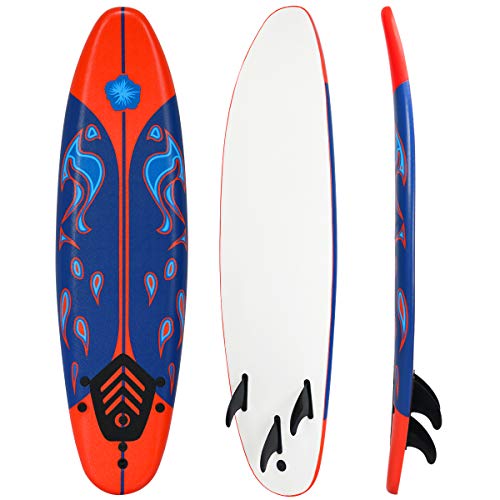
- 6-foot foam construction with fiberglass stringers
- Removable fins, leash, and traction pad
- 110-pound maximum capacity
Best For: Beginner kids and youth
Lightweight Bodyboard Pick

- 1.8-pound, 40-inch foam bodyboard
- Includes wrist leash and textured grips
- Supports riders up to 180 pounds
Best For: Portable recreational bodyboarding
High-Capacity Foam Pick
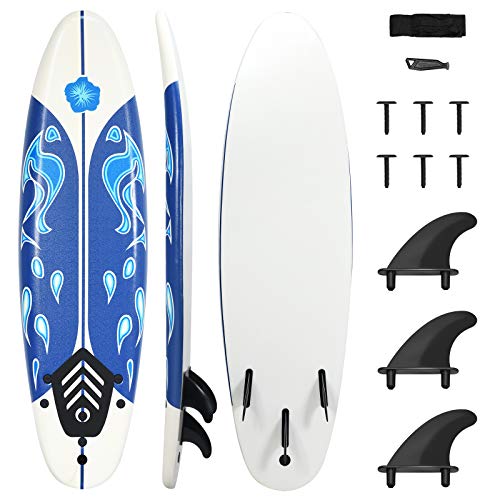
- Full-size 72-inch foam board
- 200-pound maximum capacity
- Removable fins, leash, and anti-slip surface
Best For: Adults and beginners wanting extra capacity
Performance Bodyboard Pick

- 42-inch EPS bodyboard supports up to 210 pounds
- FRP stringer and heat-laminated construction
- Dual channels and crescent tail aid control
Best For: Beginners and intermediates riding broken waves
Compact Wave Starter

- Lightweight molded foam construction
- Soft top deck with rigid feel
- Includes wrist leash
Best For: Kids and teens learning bodyboarding
Beginner Stand-Up Pick
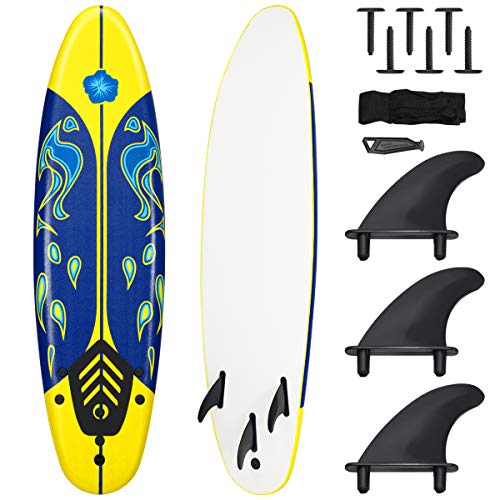
- Three detachable fins for control
- Lightweight 3.5-pound design
- Includes adjustable safety leash
Best For: Beginners of different ages learning stand-up surfing
Full-Size Bodyboard Value

- Roomy 40-inch riding surface
- Textured deck with multiple grip zones
- Includes wrist leash
Best For: Beginner bodyboarders wanting a larger platform
Lightweight Beginner Pick

- Three removable fins for easier steering
- 3.5-pound lightweight construction
- Includes safety leash and wrist rope
Best For: Beginners and casual paddling or surfing
Compact Bodyboarding Value

- Lightweight EPS core with rigid construction
- HDPE slick bottom and crescent tail
- Includes pro-quality leash with wristband
Best For: Youth beginners and casual beach outings
Durable All-Skill Bodyboard

- Buoyant EPS core with FRP stringer
- Heat-laminated construction resists deformation
- Includes double-swivel coiled wrist leash
Best For: Kids and lighter riders up to 120 pounds
Top Beginner Pick – Giantex 6' Foam Surfboard
If you are comparing surfboards under 100, the Giantex 6-foot foam board offers a beginner-focused setup with a durable foam deck, slick HDPE bottom, removable fins, and a free leash. Its 72-by-20-inch size is intended for kids, youth, and beginner riders, so check the 110-pound maximum weight capacity before buying.
Best For: Beginner kids and youth who need a full-size foam surfboard with removable fins.
Pros:
- Two fiberglass center stringers add support to the EPS core.
- Foam deck and slick HDPE bottom balance comfort with glide.
- Removable fins make transportation easier and help provide traction.
- Includes a leash and traction pad.
Cons:
- The 110-pound weight capacity limits suitability for many adults.
- Simple assembly is required.
This is a practical choice for young beginners who want a larger, stable foam platform. Adults or heavier riders should look for a board with a higher stated capacity.
Lightweight Bodyboard Pick – Wavestorm 40" Bodyboard
Among surfboards under 100, the Wavestorm 40-inch bodyboard is a compact option for wave riding and bodyboarding. It weighs only 1.8 pounds, includes a wrist leash, and uses a buoyant foam construction with a slick bottom and channels for a smooth glide.
Best For: Youth and adults seeking a lightweight bodyboard for recreational wave riding.
Pros:
- Light 1.8-pound design is easy to carry.
- Recommended weight capacity is up to 180 pounds.
- Contoured deck includes rail, nose, and elbow grips.
- Slick bottom channels support rigidity and glide.
Cons:
- At 40 inches, it is a bodyboard rather than a full-size stand-up surfboard.
- Designed with a wrist leash rather than a standard surfboard leash.
Choose this Wavestorm when portability and easy flotation matter more than standing performance. Its compact shape is well suited to casual bodyboarding across a broad range of riders.
High-Capacity Foam Pick – GYMAX 6' Body Board
For shoppers seeking surfboards under 100, the GYMAX 6-foot body board combines a foam build with a slick HDPE bottom, anti-slip surface, protective leash, and removable fins. Its 200-pound maximum capacity makes it one of the more accommodating options here for youth and adults.
Best For: Beginner to recreational riders who want a full-size foam board with a higher weight capacity.
Pros:
- 72-by-20-by-3-inch size provides a substantial riding platform.
- 200-pound maximum weight capacity suits many adults.
- Anti-slip surface and protective leash support confident handling.
- Removable fins help with direction and speed control.
Cons:
- Assembly is required before use.
- The product notes do not specify a board weight.
The GYMAX stands out for buyers who want a large foam board without the lower capacity of some beginner models. Its fin system and anti-slip deck add useful control for casual surfing and water activities.
Performance Bodyboard Pick – THURSO SURF Quill 42"
The THURSO SURF Quill is a strong contender among surfboards under 100 for riders who prefer a bodyboard with performance-oriented features. Its EPS core, FRP stringer, heat-laminated construction, HDPE slick bottom, dual channels, crescent tail, and coiled leash are designed for stability, buoyancy, and control.
Best For: Kids and adults, including beginners and intermediate riders, who want a durable bodyboard for broken waves.
Pros:
- 42-inch board supports riders up to 210 pounds.
- EPS core and FRP stringer provide buoyancy and flexibility.
- Heat-laminated deck and bottom offer durable construction.
- Dual channels, crescent tail, and 60/40 rail support maneuverability.
Cons:
- It is a bodyboard intended primarily for riding broken waves, not a stand-up surfboard.
- At 2.9 pounds, it is heavier than the Wavestorm 40-inch option.
With its higher stated capacity and reinforced construction, the Quill is a good fit for riders who want more structure and control than a basic foam bodyboard. Its feature set also makes it suitable for progressing beyond beginner use.
Compact Wave Starter – Wavestorm 36in Bodyboard
For shoppers comparing surfboards under 100, the Wavestorm 36-inch Bodyboard is a lightweight option for younger riders learning basic bodyboarding. Its molded foam construction is easy to carry, while the soft top deck and slick bottom support comfort and glide.
Best For: Kids and teens who want a compact bodyboard for beginner-friendly wave riding.
Pros:
- Lightweight 1.5-pound molded foam construction
- Soft IXL graphic top deck offers a comfortable riding surface
- High-density slick bottom helps improve glide and maintain rigidity
- Includes a wrist leash
Cons:
- At 36 inches, it is sized primarily for kids and teens
- Designed for bodyboarding rather than stand-up surfing
This Wavestorm is a practical pick when portability and a forgiving foam build matter more than stand-up surfing performance. The included leash adds convenience for casual beach sessions.
Beginner Stand-Up Pick – Giantex 6 Ft Foam Surfboard
Among surfboards under 100, the Giantex 6-foot foam surfboard stands out for shoppers seeking a lightweight beginner board with stand-up surfing features. Its three detachable fins, non-slip deck, and safety leash are designed to support control and stability across different water settings.
Best For: Kids, teens, and adults beginning stand-up surfing or enjoying varied recreational water activities.
Pros:
- Three detachable fins help with speed and directional control
- Arc linear design supports stability
- EPE deck, EPS core, PP bottom, and two fiberglass center stringers provide buoyancy and durability
- Includes an adjustable safety leash
Cons:
- Its beginner-focused foam construction may not suit advanced surfers seeking high-performance equipment
- The 72-inch length may be less convenient to transport than a shorter board
With a 6-foot format and 3.5-pound weight, this Giantex model balances manageable handling with useful stability features. It is a versatile choice for casual beginners who want one board for beach and other recreational water activities.
Full-Size Bodyboard Value – Bloo Tide 40in Bodyboard
For anyone comparing surfboards under 100, the Bloo Tide 40-inch Bodyboard offers a larger foam platform for beginner bodyboarding. Its EPS core, HDPE slick bottom, contoured grip areas, and included wrist leash are suited to casual sessions at the beach, ocean, lake, or pool.
Best For: Beginner riders who want a roomy bodyboard with a stated capacity of up to 190 pounds.
Pros:
- 40-inch board provides a larger riding surface
- EPS foam core and HDPE slick bottom support rigidity and glide
- Contoured deck includes rail grips, nose grips, and elbow texture
- Includes a wrist leash and has a 1.8-pound weight
Cons:
- Designed for bodyboarding rather than stand-up surfing
- Larger dimensions may be less compact than a 36-inch bodyboard
The Bloo Tide is a sensible option when grip and deck space are priorities. Its channeled slick bottom and rigid construction are aimed at smoother wave gliding, while the lightweight design keeps transport manageable.
Lightweight Beginner Pick – GYMAX 6FT Paddle Board
If you are comparing surfboards under 100, the GYMAX 6-foot board stands out as a lightweight option for casual water activities. Its three removable fins, ankle leash, non-slip deck, and listed 200-pound maximum weight recommendation make it a practical choice for beginners, teens, and adults.
Best For: Beginners who want a lightweight board for paddling, surfing, fishing, or water yoga.
Pros:
- Three removable fins help with directional control.
- Includes a safety leash and wrist rope to help keep the board nearby.
- EPS core, HDPE bottom, and tear-resistant XPE deck support durable use.
- Weighs just 3.5 pounds and is easy to transport.
Cons:
- The 20-inch width may offer less stability than a wider board.
- Its design is geared toward beginners and casual activities rather than advanced surfing.
The GYMAX is a versatile, portable option for buyers prioritizing low weight and beginner-friendly handling. Its included fins and leash add useful convenience for recreational outings.
Compact Bodyboarding Value – Bo Toys 33-Inch Body Board
Among surfboards under 100, this 33-inch Bo Toys body board is a compact choice for youth beginners. It combines an EPS core with a slick HDPE bottom, crescent tail, channels, and a wristband leash for beach, river, and water-park use.
Best For: Youth beginners seeking a lightweight bodyboard for recreational wave riding.
Pros:
- EPS core keeps the board lightweight and rigid.
- HDPE slick bottom, channels, and crescent tail support speed and control.
- 60/40 rails are designed for maneuverability.
- Includes a leash with wristband and comes in bright color options.
Cons:
- The 33-inch size is intended for youth and may not suit larger riders.
- The listed warranty is limited to 30 days.
This Bo Toys board is a straightforward, portable entry-level option. Its compact size and beginner skill rating make it suitable for casual use, while the slick bottom and rail design add control-oriented features.
Durable All-Skill Bodyboard – Reed 37-Inch Bodyboard
For shoppers seeking surfboards under 100 for bodyboarding, the Reed 37-inch model offers a buoyant EPS core, FRP stringer, heat-laminated construction, and a coiled wrist leash. The supplied specifications list a 120-pound maximum capacity for this Empire Yellow version.
Best For: Kids, teens, and lighter riders who want a durable board for varied wave conditions.
Pros:
- EPS core and FRP stringer provide buoyancy and flexibility.
- Heat-laminated top and bottom help resist bubbles, deformation, and fading.
- HDPE slick bottom, dual channels, crescent tail, and 60/40 rail support control.
- Includes a stainless steel, double-swivel coiled leash.
Cons:
- The listed 120-pound maximum capacity limits suitability for heavier riders.
- At 37 inches, it may be less compact than smaller youth bodyboards.
The Reed combines construction upgrades with control-focused contours, making it a strong recreational choice for lighter riders. Confirm the size and weight capacity before ordering, especially when choosing among the available 33-, 37-, and 39-inch versions.
How We Picked the Best Surfboards Under 100
We selected boards based on beginner-friendly design, flotation, stability, portability, safety features, and overall value. The lineup includes stand-up foam surfboards, compact bodyboards, and versatile options for beach play or light recreational use. Removable fins, non-slip decks, protective leashes, and lightweight EPS or foam construction were treated as useful advantages for new riders.
Because budget boards vary considerably in size and intended use, we compared each product according to its likely rider and activity rather than treating every board as interchangeable. Always check the manufacturer’s weight and height guidance before ordering.
Quick Comparison
| Board Type | Best For | Main Advantage |
|---|---|---|
| 6-foot foam surfboard | Kids, teens, and beginner stand-up riders | Greater length and stability |
| 40- to 42-inch bodyboard | Youth and casual wave riders | Easy control and portability |
| 33- to 39-inch bodyboard | Smaller children | Lightweight, compact handling |
| SUP-style foam board | Older teens and casual paddling | More room for standing and balance practice |
Key Buying Factors for Surfboards Under $100
Board Size and Rider Weight
Length affects stability, but width, thickness, and buoyancy matter just as much. A larger beginner board is generally easier to balance on, while a smaller bodyboard can be more manageable for children. Use the listed weight range as the deciding factor when size options overlap.
Foam, EPS, and Durability
Soft foam decks are forgiving for beginners and useful around crowded beaches. EPS-core bodyboards are lightweight and responsive, but they still need protection from sharp surfaces, excessive heat, and rough storage. Inspect rails, deck coverings, and fin boxes before every session.
Fins, Leashes, and Safety
Removable fins can improve tracking and make storage easier. A coiled wrist or ankle leash helps keep the board nearby, but it does not replace supervision or water-safety equipment. Beginners should stay in calm, shallow conditions and avoid waves beyond their ability.
Intended Activity
Bodyboards are designed primarily for prone riding, while 6-foot foam surfboards are better suited to learning to stand. Some SUP-style boards can support casual paddling, but budget models may not provide the rigidity or capacity needed for long-distance use.
Who Should Buy Which Surfboards Under 100?
- Young beginners: Choose a stable 6-foot foam board if the child fits the weight limit and has supervision; smaller children may prefer a 33- to 37-inch bodyboard.
- Teens and casual wave riders: A 40- to 42-inch bodyboard offers a practical mix of flotation, control, and easy transport.
- Adults trying stand-up surfing: Look for the widest, highest-capacity foam board in the selection and confirm its weight rating before purchase.
- Families wanting versatility: A board with removable fins, a non-slip deck, and an included leash is easier to share and maintain.
For most first-time buyers, stability and correct sizing matter more than extra accessories. Pick the board that matches the rider’s body size and intended position in the water, then pair it with basic safety gear and realistic beginner conditions.