Choosing the right ocean thru hull sonar transducer can make a bigger difference than the display itself. The right match improves signal quality, reduces turbulence-related noise, and helps your fishfinder perform at its best offshore.
Below, we’ve narrowed the field to 10 strong options for different hull materials, mounting angles, and sonar systems so you can buy with more confidence.
Best 10 Ocean Thru Hull Sonar Transducer Picks for 2026
Premium UHD Scanning Option
Garmin GT56UHD-TH Thru-Hull Transducer

- Ultra High-Definition scanning sonar
- High wide CHIRP for target separation
- Supports transom, trolling motor, or thru-hull mounting
Best For: Boaters who want detailed imaging and flexible mounting
3D Imaging Choice
Raymarine RealVision 3D Thru Hull

- Supports RealVision 3D and multiple CHIRP modes
- Gyro stabilization helps steady the image
- Stainless steel body fits fiberglass, wood, or metal hulls
Best For: Boaters wanting life-like 3D sonar and rugged construction
Long-Range Fishing Pick
Garmin PS70 Thru-Hull with Fairing Block
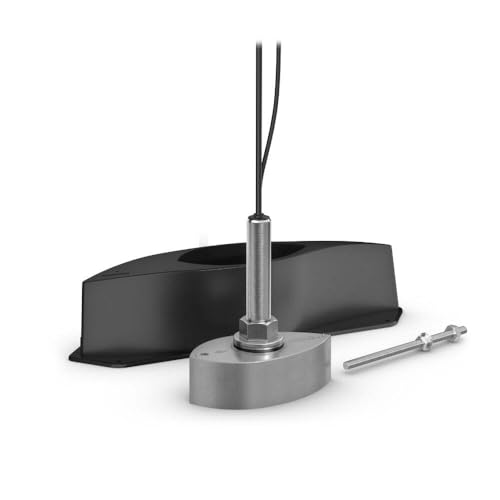
- Real-time sonar up to 1,000 feet
- 800 watts of high power output
- Includes fairing block for through-hull installation
Best For: Boaters needing long-range real-time sonar coverage
Classic Bronze Option
Furuno 525T-BSD Bronze Thru-Hull

- Bronze thru-hull construction
- 50/200 kHz sonar with temperature sensor
- Includes fairing block and 30-foot cable
Best For: Boat owners wanting a traditional bronze transducer with temp sensing
Premium Tilted Thru-Hull Sounder

- 20-degree tilt for angled thru-hull mounting
- Flush, low-profile thru-hull installation
- Garmin unit with 2-year limited warranty
Best For: Buyers wanting a compact tilted thru-hull sonar transducer
Imaging-Heavy Large-Vessel Choice
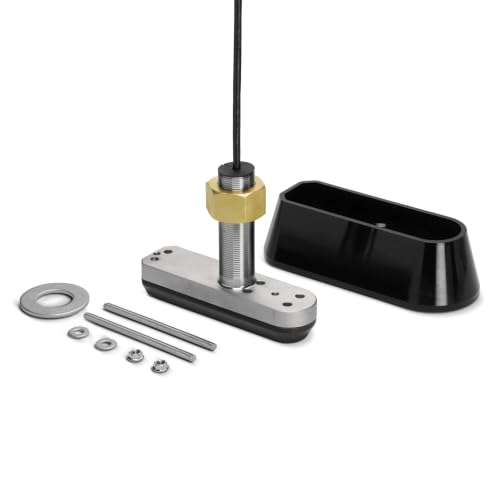
- MEGA Side Imaging+ up to 400 feet per side
- MEGA Down Imaging+ and Dual Spectrum CHIRP
- Built-in temperature sensor in stainless steel design
Best For: Large boats using compatible Humminbird sonar systems
Deep-Range CHIRP Option

- CHIRP range from 80–165 kHz
- Fast-response water temperature sensing
- Up to 2,400 feet in freshwater
Best For: Garmin users wanting a flush CHIRP thru-hull transducer
Thru-Hull CHIRP Choice
Humminbird Plastic Thru Hull Temperature Transducer for Helix

- Dual Spectrum CHIRP 2D sonar
- Built-in temperature sensor
- Fits compatible HELIX G2/G3/G4 units
Best For: Compatible HELIX owners with single-layer fiberglass hulls
Garmin Thru-Hull Adapter
Garmin Airmar P19 Plastic Thru-Hull Mount Transducer

- Plastic thru-hull mount design
- 8-pin Garmin P19 transducer
- 20° tilt with 2-year limited warranty
Best For: Garmin owners needing a basic thru-hull mount
Dual-Beam Hull Sensor
Humminbird Plastic Thru Hull Transducer DualBeam Sonar

- DualBeam 200/50 kHz sonar
- Includes fairing block and 30-foot cable
- Compatible with many older Humminbird models
Best For: Owners of compatible older Humminbird sonar systems
Premium UHD Scanning Option – Garmin GT56UHD-TH Thru-Hull Transducer
Garmin 010-02732-10 Thru-Hull Transducer GT56UHD-TH - HW Chirp Sonar and SideVü 455/800/1000 KHZ
Check Price On AmazonIf you want an ocean thru hull sonar transducer that prioritizes image detail, the Garmin GT56UHD-TH is built around Ultra High-Definition scanning sonar and high wide CHIRP traditional sonar. It also adds multiple frequencies for coverage across different depths, while the thru-hull design gives you flexible installation options for a cleaner setup.
Best For: Boaters who want a versatile thru-hull transducer with UHD scanning and multiple mounting options.
Pros:
- Ultra High-Definition scanning sonar shows what is below and around the boat.
- High wide CHIRP traditional sonar is designed for strong target separation.
- Multiple sonar frequencies help cover different fishing depths.
- Can be mounted transom, trolling motor, or thru-hull.
Cons:
- Information provided does not include specific hull material compatibility.
- Best fit depends on having a system that supports its sonar features.
This is a strong pick if your priority is detailed sonar imaging with installation flexibility. The bright, vivid color output and broad frequency support make it a practical choice for boaters who want more than basic depth readings.
3D Imaging Choice – Raymarine RealVision 3D Thru Hull
Raymarine RealVision 3D Stainless Steel Thru Hull Transducer - 0 Degree A80615 Multicoloured
Check Price On AmazonThe Raymarine RealVision 3D stainless steel unit is a feature-rich ocean thru hull sonar transducer for anglers and boaters who want detailed structure imaging. It supports RealVision 3D, CHIRP DownVision, SideVision, and High Frequency CHIRP, and its gyro stabilization is designed to compensate for boat movement for steadier sonar returns.
Best For: Users who want life-like 3D sonar imagery and a rugged thru-hull build.
Pros:
- Supports RealVision 3D, DownVision, SideVision, and High Frequency CHIRP.
- Gyro stabilization helps compensate for boat movement.
- Rugged stainless steel body suits fiberglass, wood, or metal hulls.
- Transmits on 60 different frequencies for detailed imagery.
Cons:
- 0-degree design may not suit every hull setup.
- More advanced feature set may be more than basic users need.
This model stands out when sonar detail and hull durability matter most. If you want a through-hull option that emphasizes rich imaging and stability, it is clearly aimed at more demanding marine use.
Long-Range Fishing Pick – Garmin PS70 Thru-Hull with Fairing Block
The Garmin PS70 is an ocean thru hull sonar transducer built for long-range performance, with real-time sonar reach up to 1,000 feet and 800 watts of power. Its broad sonar coverage and steady image display make it a practical option for boaters who want deeper-looking sonar from a through-hull installation.
Best For: Boaters who need real-time sonar coverage at longer distances.
Pros:
- Real-time sonar reaches up to 1,000 feet.
- 800-watt output supports high power performance.
- Broad sonar coverage helps scan more water.
- Includes fairing block for through-hull installation.
Cons:
- Details on exact sonar modes are limited in the supplied notes.
- May be more specialized than a general-purpose transducer.
If long-range sonar matters more than extra extras, the PS70 keeps the focus on reach, power, and stable display performance. It is a straightforward through-hull choice for boaters who want dependable coverage from a high-power unit.
Classic Bronze Option – Furuno 525T-BSD Bronze Thru-Hull
The Furuno 525T-BSD is a bronze ocean thru hull sonar transducer with a traditional 50/200 kHz setup and a built-in temperature sensor. It also includes a fairing block and a 30-foot cable with a 10-pin plug, making it a straightforward through-hull solution for compatible displays and installations.
Best For: Boat owners who want a bronze thru-hull transducer with temperature sensing and a fairing block.
Pros:
- Bronze thru-hull construction.
- Includes fairing block for installation support.
- 50/200 kHz sonar with temperature sensor.
- 30-foot cable with 10-pin plug included.
Cons:
- Traditional sonar setup may not match newer imaging-focused units.
- Requires compatibility with a 10-pin connection.
This is a practical pick if you want a straightforward bronze through-hull transducer with useful temperature data. It focuses on core sonar essentials rather than advanced imaging features, which may be exactly what some boaters prefer.
Premium Tilted Thru-Hull Sounder – Garmin Airmar B150M
If you want an ocean thru hull sonar transducer built for a clean flush installation, the Garmin Airmar B150M is a straightforward option. Its 20-degree tilt design is meant to help with mounting angle, while the thru-hull format keeps the install low-profile on the boat.
Best For: Boat owners who want a compact thru-hull sonar/fathometer transducer with a tilted mount and Garmin compatibility.
Pros:
- 20-degree tilt helps support angled thru-hull mounting.
- Thru-hull mount keeps the installation flush and low-profile.
- Built for Garmin use, with a 2-year limited warranty noted.
- Compact unit at 1.8 pounds.
Cons:
- Product notes list it as a sonar fathometer, not a multi-imaging model.
- Specific sonar frequency or depth details are not provided in the notes.
For buyers focused on a simple tilted thru-hull setup rather than advanced imaging features, this model is appealing. It fits the practical role of a marine sonar transducer without adding unnecessary complexity.
Imaging-Heavy Large-Vessel Choice – Humminbird SSTH 14 HW MSI+ T
This ocean thru hull sonar transducer is aimed at larger boats that want Humminbird’s imaging and CHIRP features in one stainless-steel package. The SSTH 14 HW MSI+ T combines MEGA Side Imaging+, MEGA Down Imaging+, Dual Spectrum CHIRP, and built-in temperature sensing for a more complete view below the hull.
Best For: Large-vessel owners using compatible Humminbird systems who want imaging, CHIRP sonar, and temperature in one thru-hull transducer.
Pros:
- MEGA Side Imaging+ reaches out to 400 feet on each side.
- MEGA Down Imaging+ reaches 200 feet down.
- Dual Spectrum CHIRP offers clear fish arches and target separation.
- Built-in temperature sensor adds extra data from a single transducer.
Cons:
- Designed for specific Humminbird models rather than broad universal use.
- HELIX compatibility may require an adapter cable.
For boaters who prioritize picture-like imaging and integrated sonar data, this model delivers a strong feature set. It makes the most sense when paired with the supported Humminbird electronics listed in the notes.
Deep-Range CHIRP Option – Garmin GT17M-THF
For shoppers comparing an ocean thru hull sonar transducer with a strong depth rating, the Garmin GT17M-THF is built around CHIRP performance and a flush through-hull installation. Its 0-degree design and available 12- or 20-degree tilt options give installers some flexibility, while the auto-id feature is meant to simplify setup with compatible Garmin devices.
Best For: Garmin owners who want a flush thru-hull CHIRP transducer with temperature sensing and high freshwater depth capability.
Pros:
- CHIRP range of 80–165 kHz for target resolution.
- Fast-response water temperature sensing is included.
- Maximum depth performance up to 2,400 feet in freshwater.
- Auto-id feature supports plug-and-play use with compatible Garmin devices.
Cons:
- Compatibility depends on matching Garmin equipment.
- Depth rating is stated for freshwater, not ocean conditions.
This is a practical pick if you want a Garmin thru-hull transducer with CHIRP, temperature, and flexible tilt options. It stands out most for its deep freshwater performance and simple installation approach.
Thru-Hull CHIRP Choice – Humminbird Plastic Thru Hull Temperature Transducer for Helix
If you’re looking for an ocean thru hull sonar transducer for a fiberglass boat, this Humminbird model delivers Dual Spectrum CHIRP 2D sonar with a built-in temperature sensor. It is designed for single-layer fiberglass hulls and works as a 2D sonar source for compatible HELIX units, making it a practical fit when you want clean below-hull installation and broad compatibility.
Best For: Boat owners with compatible HELIX G2/G3/G4 systems who need a thru-hull 2D CHIRP transducer for single-layer fiberglass hulls.
Pros:
- Dual Spectrum CHIRP 2D sonar with 150-220kHz range
- Built-in temperature sensor included
- 30-foot cable and mounting hardware included
- Compatible with a wide range of GPS-equipped HELIX models
Cons:
- 2D sonar only, so it is not a Side Imaging or Down Imaging source
- Designed for single-layer fiberglass hulls
- Maximum depth is listed at 1200 feet
This is a straightforward choice if your priority is a Humminbird-compatible ocean thru hull sonar transducer with temperature sensing and Dual Spectrum CHIRP performance. Just make sure your hull type and HELIX model match before buying.
Garmin Thru-Hull Adapter – Garmin Airmar P19 Plastic Thru-Hull Mount Transducer
For buyers searching for an ocean thru hull sonar transducer with a simple plastic thru-hull mount, the Garmin Airmar P19 is a compact option to consider. The supplied notes identify it as a Garmin P19 nylon 20° tilt transducer with an 8-pin connection and a thru-hull mount design, which makes it suitable when you want a mounted transducer rather than an external setup.
Best For: Garmin users who want a plastic thru-hull mount transducer with an 8-pin connection and a 20° tilt design.
Pros:
- Thru-hull mount design
- Garmin Airmar P19 with 8-pin connection
- 20° tilt transducer design
- Backed by a 2-year limited warranty
Cons:
- Notes do not list sonar frequencies or depth specs
- No detailed compatibility list is provided in the supplied information
- Less feature detail than the other transducers in this roundup
This is best viewed as a basic Garmin thru-hull mounting solution when the key requirement is fit and connection style. If you need detailed sonar performance specs, you may want to verify those separately before purchase.
Dual-Beam Hull Sensor – Humminbird Plastic Thru Hull Transducer DualBeam Sonar
Humminbird Plastic Thru Hull Transducer DualBeam Sonar, 200/50 kHz, XTH 9 DB 74 P
Check Price On AmazonIf you need an ocean thru hull sonar transducer for a Humminbird system and want a dual-beam setup, this model is built around 200/50 kHz DualBeam sonar. It is designed for thinner hulls, includes a fairing block, and comes with a 30-foot cable, making it a practical below-hull option for compatible older HELIX and 100-to-1100 series units.
Best For: Humminbird owners with compatible older sonar systems who need a dual-beam thru-hull transducer for thinner hulls.
Pros:
- DualBeam sonar with 200 kHz and 50 kHz frequencies
- Compatible with many HELIX and older Humminbird series models
- Includes fairing block and mounting hardware
- 30-foot cable included
Cons:
- Not compatible with several HELIX 5/7 DI and SI variants listed in the notes
- Not recommended for trailered boats
- Professional installation is recommended
This transducer makes sense when you need a traditional dual-beam Humminbird thru-hull setup and your unit is on the compatibility list. The main tradeoff is that it is more specialized, so matching the exact sonar model matters.
How We Picked the Best Ocean Thru Hull Sonar Transducer
We focused on transducers that make sense for real offshore use: strong sonar performance, dependable hull-mounted installation, and broad compatibility with major marine electronics brands. We also considered material type, temperature sensing, tilt or fairing options, and whether each model is better suited to fishing, cruising, or general navigation.
For an Ocean Thru Hull Sonar Transducer, installation fit matters just as much as frequency range. A model can be excellent on paper but still be a poor choice if it does not match your hull shape, dead-rise angle, or display system.
Quick Comparison
Broadly, the 10 picks split into a few categories. Some are built for high-detail CHIRP and imaging performance, others prioritize deep-water traditional sonar, and a few are aimed at specific ecosystems such as Garmin, Humminbird, or Raymarine. Bronze and stainless-steel housings are common on premium offshore setups, while plastic options can work well for lighter-duty boats and compatible hull materials.
What to Look for at a Glance
- Sonar type: CHIRP, SideVü/Down Imaging, traditional 50/200 kHz, or high-frequency imaging
- Hull match: 0-degree, tilted, or fairing-block installation
- Material: Bronze, stainless steel, or plastic depending on hull type and corrosion environment
- System compatibility: Make sure the transducer works with your chartplotter or fishfinder brand
- Depth goals: Offshore deep-water use may need different performance than inshore scanning
Key Buying Factors for an Ocean Thru Hull Sonar Transducer
Mounting angle and hull shape are the first things to verify. If the transducer does not sit correctly relative to the water flow, you can lose speed performance and sonar clarity. Tilted designs and fairing blocks help compensate for deadrise on V-shaped hulls.
Material choice affects durability and corrosion resistance. Bronze is a common offshore favorite for strength and reliability, while stainless steel is often chosen for certain performance and aesthetics. Plastic can be appropriate on compatible hulls, but it is not always the best fit for every saltwater setup.
Frequency and sonar features should match your fishing style. High-frequency imaging is useful for detail in shallow to mid-depth water, while lower-frequency traditional CHIRP tends to be better for depth and fish target separation offshore.
Temperature sensing is a useful bonus for anglers tracking water changes, but it should not be the only reason you choose a transducer. Prioritize clean sonar output and proper compatibility first.
Who Should Buy Which Ocean Thru Hull Sonar Transducer?
Offshore anglers should lean toward rugged bronze or stainless models with CHIRP and deep-water capability. If you run a Garmin, Raymarine, Humminbird, or Furuno system, staying within the same ecosystem usually simplifies setup and tuning.
Mixed-use boat owners may prefer a versatile model that balances imaging detail with traditional sonar performance. If your boat sees both cruising and fishing, choose a transducer that performs well across common depths rather than chasing the most specialized option.
Cost-conscious buyers should focus on correct fit and brand compatibility before paying for advanced imaging. The best Ocean Thru Hull Sonar Transducer is the one that matches your hull, your electronics, and the water conditions you actually run in.