When you’re offshore, a compact beacon can make the difference between a fast rescue and a long wait. The best ocean personal locator beacon for boating is one you can deploy quickly, trust in rough conditions, and maintain with minimal hassle.
Below, we focus on 10 strong options for boaters who want reliable 406 MHz distress signaling, GPS location reporting, and practical features like buoyancy, long battery life, and clear status indicators.
Best 10 Ocean Personal Locator Beacon for Boating Picks for 2026
Ocean-Ready PLB
ACR ResQLink 400 for Boating Emergencies

- No subscription required
- GPS and Galileo GNSS support
- LED and infrared strobes for visibility
Best For: Boaters who want a subscription-free beacon with global coverage
US-Programmed Beacon
McMurdo FastFind 220 for Remote Boating

- Pre-programmed for US registration
- Works anywhere around the world
- Simple one-button emergency activation
Best For: Boaters needing a US-programmed PLB for remote emergencies
Safety Kit Combo
ResQLink View and ResQFlare for Boating
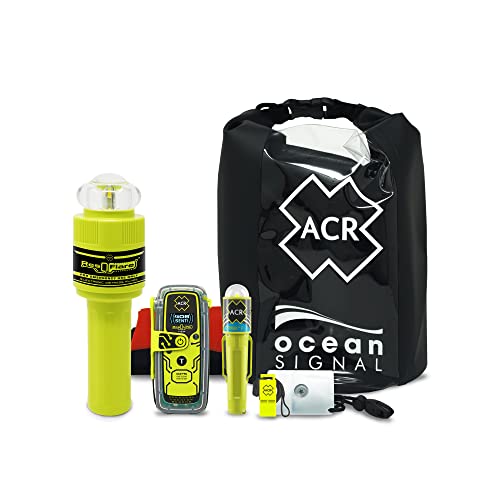
- Includes PLB plus electronic distress flare
- Adds whistle, mirror, light, dry bag, and flag
- Good for multi-signal marine safety
Best For: Boaters who want a beacon plus extra distress tools
Compact Lifejacket Beacon

- Only 4 oz and very compact
- One-handed operation with lifejacket clip
- 24+ hours of operation and 7-year battery
Best For: Boaters who want a small, easy-to-mount PLB
Premium Ocean PLB Survival Kit
ACR ResQLink View RLS + ResQFlare

- RLS confirmation message included
- USCG approved electronic flare
- Mirror, whistle, strobe, and dry bag included
Best For: Boaters who want a PLB with extra offshore signaling gear
Compact Global RLS Beacon

- Compact, lightweight PLB design
- RLS confirmation and NFC status readout
- 11-year battery life
Best For: Boaters wanting a compact PLB with modern status features
Buoyant GPS PLB for Boats
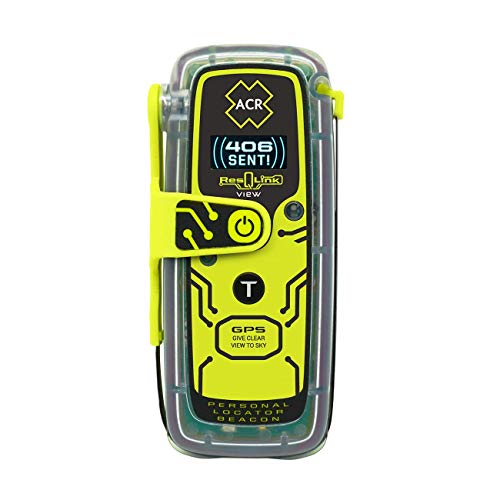
- GPS distress signaling on 406 MHz
- Buoyant with clips, straps, and lanyards
- LED and infrared strobes for visibility
Best For: Boaters who want a simple buoyant PLB with GPS distress signaling
Offshore Safety Kit Pick
ACR ResQLink 400 GPS Survival Kit

- PLB with GPS precision and bright strobe
- Includes light, whistle, mirror, and dry bag
- Compact emergency kit for onboard storage
Best For: Boaters wanting a complete emergency signaling kit
Confirmed-Rescue Beacon Pick

- RLS confirms your distress signal was received
- Digital display with infrared strobe
- No subscription required; 5-year battery
Best For: Boaters who want rescue confirmation and a screen
Lightweight Marine Beacon Pick

- RLS rescue confirmation with global satellite support
- Small, lightweight, and buoyant design
- Strobe plus infrared strobe for visibility
Best For: Boaters wanting a compact beacon with simple carry
Ocean-Ready PLB – ACR ResQLink 400 for Boating Emergencies
If you want an ocean personal locator beacon for boating that keeps things simple, the ACR ResQLink 400 is built for fast distress signaling without any subscription fees. It combines GPS and Galileo GNSS with 406 MHz distress and homing signals, plus LED and infrared strobes for visibility in low-light conditions.
Best For: Boaters who want a subscription-free beacon with global satellite coverage and precise location support.
Pros:
- No subscription required for ongoing use.
- 406 MHz distress and homing signals help rescuers locate you.
- GPS and Galileo GNSS provide precise location data.
- LED and infrared strobes improve visibility at night or in low light.
Cons:
- Single-purpose safety tool rather than a full onboard survival kit.
- Requires you to understand proper beacon registration and emergency use.
For boaters focused on a straightforward, globally capable beacon, this model stands out for its no-fee operation and modern positioning support. It is a practical choice when you want reliable rescue signaling in a compact unit.
US-Programmed Beacon – McMurdo FastFind 220 for Remote Boating
The McMurdo FastFind 220 is a practical ocean personal locator beacon for boating if you want a unit that is pre-programmed for US registration and can still function anywhere around the world. It is designed for emergency use in remote, treacherous conditions, with a simple activation process that deploys the antenna, breaks the seal, and turns the beacon on.
Best For: Boaters who need a US-programmed PLB for remote emergency situations.
Pros:
- Pre-programmed for US country code registration.
- Works anywhere around the world once activated.
- Simple emergency activation with antenna deployment and ON button.
- Built for grave and imminent danger scenarios.
Cons:
- Registration is tied to US programming unless you choose a different listing.
- Not intended for casual or non-emergency use.
This beacon makes sense if you want a no-frills rescue device with clear registration setup and a straightforward operating sequence. It is aimed at serious emergency preparedness rather than extra feature depth.
Safety Kit Combo – ResQLink View and ResQFlare for Boating
If you’re shopping for an ocean personal locator beacon for boating and want more than just a beacon, this safety kit bundles the ResQLink View PLB with an electronic distress flare and several visual signaling accessories. It is a practical option when you want layered emergency gear in one package for marine trips.
Best For: Boaters who want a beacon plus extra visual distress tools in one kit.
Pros:
- Includes a ResQLink View PLB and ResQFlare electronic distress flare.
- Also adds a rescue light, mirror, whistle, dry bag, and distress flag.
- Designed as a broader boating safety package.
- Useful when you want multiple ways to signal for help.
Cons:
- Heavier than a standalone beacon at 2.4 pounds.
- More gear may be more than some users need.
For boaters who like redundancy, this kit adds useful backup signaling items beyond the PLB itself. It is best viewed as a compact safety bundle rather than a minimalist locator beacon.
Compact Lifejacket Beacon – rescueME PLB1 for Boating
The rescueME PLB1 is a compact ocean personal locator beacon for boating, built for easy one-handed operation and lifejacket attachment. It pairs a 66-channel GPS receiver with a high-intensity strobe, while staying waterproof and subscription-free for straightforward emergency use.
Best For: Boaters who want a small, easy-to-carry beacon that mounts to a lifejacket.
Pros:
- Very compact and weighs just 4 oz.
- One-handed operation can be helpful in difficult conditions.
- Attaches to a lifejacket with a unique mounting clip.
- Offers 24+ hours of operation and a 7-year battery life.
Cons:
- Waterproof rating is listed to 49 feet, not unlimited submersion.
- Focuses on core beacon function rather than extra accessories.
This is a strong pick if you value compact size and quick activation above all else. For boating safety, it offers the essentials in a lightweight form that is easy to keep on your person.
Premium Ocean PLB Survival Kit – ACR ResQLink View RLS + ResQFlare
If you want an ocean personal locator beacon for boating with extra visual signaling, this ACR kit combines the ResQLink View RLS beacon with an electronic distress flare and other survival tools. The beacon adds Return Link Service confirmation, while the included flare, strobe, mirror, whistle, and dry bag make it a broader offshore emergency setup.
Best For: Boaters who want a PLB plus a full emergency signaling kit for offshore use.
Pros:
- ResQLink View RLS sends a direct confirmation message back through the Cospas-Sarsat network.
- ResQFlare is USCG approved, fully buoyant, lightweight, and visible for 6 nautical miles.
- Includes a C-Strobe H2O rescue light, signal mirror, Res-Q whistle, and RapidDitch dry bag.
- Built for boating, fishing, hiking, hunting, and other outdoor emergencies.
Cons:
- It is a kit, so buyers only wanting a standalone beacon may not need the extras.
- The added components increase complexity compared with a basic PLB-only purchase.
This is a strong choice if you want more than a beacon alone. For boaters, the combination of GPS-enabled alerting and multiple backup signals adds useful redundancy when visibility and response time matter.
Compact Global RLS Beacon – Jotron Tron SA20 PLB
For an ocean personal locator beacon for boating, the Jotron Tron SA20 focuses on compact size, global distress signaling, and straightforward status checks. It operates on 406/121.5 MHz, adds Return Link Service confirmation, and includes NFC connectivity for checking device status with a smartphone.
Best For: Boaters who want a compact, lightweight PLB with RLS and smartphone status checking.
Pros:
- Compact and lightweight design makes it easy to carry on board or wear.
- 406/121.5 MHz operation supports worldwide distress signaling for maritime and land emergencies.
- Return Link Service provides confirmation that your distress signal was received and your location identified.
- NFC connectivity lets you read status through a smartphone.
Cons:
- It is programmed for US registration, so buyers outside the US need to check the separate listing.
- Unlike some kit-style options, it does not include extra visual survival gear.
This beacon is a practical fit if you want a simple, modern PLB with helpful feedback features. The long 11-year battery life also adds appeal for boaters who want a low-maintenance emergency device.
Buoyant GPS PLB for Boats – ACR ResQLink View
The ACR ResQLink View is a straightforward ocean personal locator beacon for boating if you want GPS distress signaling without a subscription. Once activated, it sends an SOS with GPS position via 406 MHz and also includes a 121.5 MHz homing signal to help rescuers narrow the search.
Best For: Boaters who want a buoyant, GPS-enabled PLB with simple operation and no subscription requirement.
Pros:
- Sends GPS distress alerts on 406 MHz with 121.5 MHz homing support.
- Buoyant, rugged, and lightweight for marine and outdoor use.
- Includes attachment clips, straps, and lanyards for better wearability.
- Has bright LED and infrared strobe lights for additional visual signaling.
Cons:
- Optional 406Link testing subscription is needed for text and email test messages.
- Battery average life is listed as 28 hours, so it is not designed for extended use after activation.
This model is a strong no-frills choice for boaters who want reliable satellite distress signaling and easy carry options. Its buoyant build and multiple attachment methods make it especially practical around the water.
Offshore Safety Kit Pick – ACR ResQLink 400 GPS Survival Kit
If you want an ocean personal locator beacon for boating with a full emergency backup kit, this ACR bundle is built around the ResQLink 400 PLB plus signaling tools that cover the basics when every minute matters. The compact beacon includes GPS precision and fast rescue capability, while the added light, whistle, mirror, and dry bag help improve visibility and keep essentials protected.
Best For: Boaters who want a complete, compact emergency kit with a PLB and extra signaling gear.
Pros:
- Includes the ResQLink 400 PLB with GPS tracking and a bright strobe.
- Comes with a waterproof C-Strobe H2O rescue light, whistle, mirror, and RapidDitch dry bag.
- Compact kit format makes it easier to store onboard or in a ditch bag.
Cons:
- Bulkier than a beacon-only option because it includes multiple accessories.
- Best if you want the full kit; not the simplest minimal carry choice.
This is a practical pick if you want more than just a beacon and prefer having layered signaling tools ready for marine emergencies. For boating safety, the bundled extras add useful redundancy without changing the core focus on quick rescue.
Confirmed-Rescue Beacon Pick – ACR ResQLink View RLS
For an ocean personal locator beacon for boating, the ResQLink View RLS stands out because it pairs global GPS coverage with a digital display and Return Link Service. That means the beacon can help alert search and rescue, while also confirming that the distress signal was received, which adds useful reassurance in an emergency.
Best For: Boaters who want a PLB with confirmation feedback and a clear digital display.
Pros:
- Return Link Service confirms the distress signal was received.
- Digital display and infrared strobe improve visibility and status feedback.
- No subscription required, with 5-year battery life and 28+ hours of operational life.
- Built-in buoyancy and a multifunction clip system support marine carry.
Cons:
- More advanced features may be more than casual users need.
- Screen-based model may not appeal to those who prefer the simplest beacon design.
This is a strong choice if you value confirmation that your alert was received, especially on open water where peace of mind matters. The boating-friendly clip options and buoyant design make it a smart fit for marine use.
Lightweight Marine Beacon Pick – ACR ResQLink 410 RLS
If you’re shopping for an ocean personal locator beacon for boating and want a compact, straightforward option, the ResQLink 410 RLS focuses on the essentials. It offers Return Link Service, global GPS/Galileo/MEOSAR compatibility, and built-in buoyancy, while keeping the package small enough for easy carry and quick access.
Best For: Boaters who want a lightweight beacon with confirmation features and simple carry options.
Pros:
- Return Link Service confirms the distress alert was received.
- Built-in buoyancy and a small, lightweight design suit marine use.
- Includes both strobe and infrared strobe lights for visibility.
- No subscription required, with 5-year battery life and 24+ hours of operation.
Cons:
- Does not include the screen found on the View RLS model.
- Less accessory-rich than a full survival kit.
This model is a good fit if you want the core rescue technology without extra bulk. Its boating and paddling-friendly attachment options make it easy to keep close at hand when conditions change fast.
How We Picked the Best Ocean Personal Locator Beacon for Boating
We prioritized devices that fit real boating use: global 406 MHz distress signaling, integrated GPS or GNSS positioning, strong waterproofing, and a form factor that’s easy to stow on a PFD, in a grab bag, or in a ditch kit. We also looked for boat-friendly usability, including simple activation, readable indicators, and battery life suited to seasonal or extended offshore use.
For an Ocean Personal Locator Beacon for Boating, the most important factor is not extra accessories—it’s dependable distress performance when you may not be able to speak, steer, or wait for a phone signal.
Quick Comparison
Most of the picks fall into a few clear groups: basic PLBs with GPS for straightforward emergency signaling, display-equipped models that let you confirm status and battery details at a glance, and RLS-enabled units that provide return-link confirmation that your distress alert was received. Some kits also bundle an electronic flare, which can be useful for boaters who want both long-range satellite distress signaling and close-range visual signaling.
Key Buying Factors for Ocean Personal Locator Beacon for Boating
Signal Type and Coverage
Look for 406 MHz satellite distress capability with embedded GPS or GNSS. That combination helps rescuers narrow your position quickly and is the core feature you want offshore.
Battery Life and Maintenance
Long battery life matters, but so does service interval clarity. Choose a beacon with a battery and maintenance schedule you can realistically keep up with before each season or trip.
Buoyancy and Attachment
For boating, buoyant designs or secure lifejacket attachment options are especially useful. If the unit is dropped during an emergency, it should remain accessible or float where you can recover it.
Display, RLS, and Ease of Use
Digital displays can make status checks easier, while Return Link Service adds peace of mind by confirming that your alert reached the system. If you want the simplest setup possible, a no-display PLB may still be the better choice.
Kit Versus Beacon Only
Some shoppers will prefer a standalone beacon; others may want a kit with a distress flare or survival add-ons. For many boaters, a compact beacon plus a separate offshore emergency kit is the most flexible approach.
Who Should Buy Which Ocean Personal Locator Beacon for Boating?
If you want a straightforward, proven beacon for routine coastal or offshore trips, a basic GPS-enabled PLB is often the best fit. If you regularly boat far from shore and want confirmation that your distress signal was received, consider an RLS model. If you want a single package for broader emergency readiness, a bundled safety kit may be the better value. For sailors, anglers, and offshore cruisers, the best choice is the unit you’ll actually carry, test, and maintain consistently.