Protecting a boat takes more than one device. The best ocean marine surveillance system can combine remote alerts, onboard cameras, GPS tracking, radar, and weather-resistant hardware to help you monitor your vessel with confidence.
In this roundup, we focus on practical options for real-world boating, from LTE monitoring hubs and security cameras to marine radar systems built for wider-range awareness offshore.
Best 10 Ocean Marine Surveillance System Picks for 2026
Cellular Boat Security Hub
LocMarine Global LTE Monitoring

- 4G/5G LTE remote alerts
- Tracks bilge, entry, GPS, battery
- Includes 6 months monitoring service
Best For: Boat owners wanting remote security and alert coverage
Chartplotter Camera

- 1080p marine video output
- Standard/reverse images supported
- Works with Garmin network systems
Best For: Garmin users adding integrated camera feeds
Wireless Starter Monitoring Kit

- Wireless alerts to smartphone
- Includes battery, bilge, entry sensors
- No wiring or Wi-Fi required
Best For: Simple remote monitoring with fast setup
Engine Room IP Camera
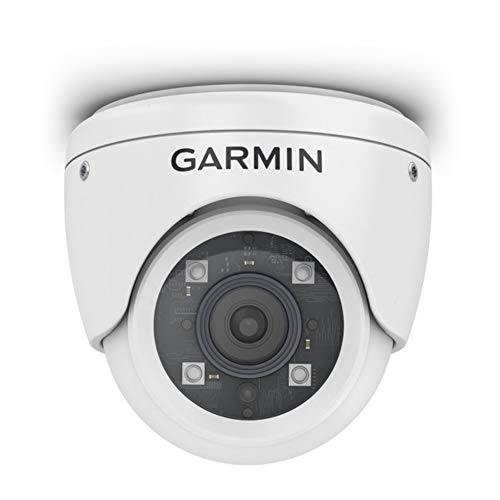
- Monitors inside and around the boat
- Well suited to engine room use
- Simple, high-quality build
Best For: Basic interior or engine-room camera coverage
Underwater CCTV Pick
Barlus 5MP POE Underwater Camera

- IP68 waterproof for direct water use
- 5MP video with white and infrared light
- Includes 1TB HDD for recording
Best For: Underwater viewing from boats, docks, or tanks
Marine Radar Pick
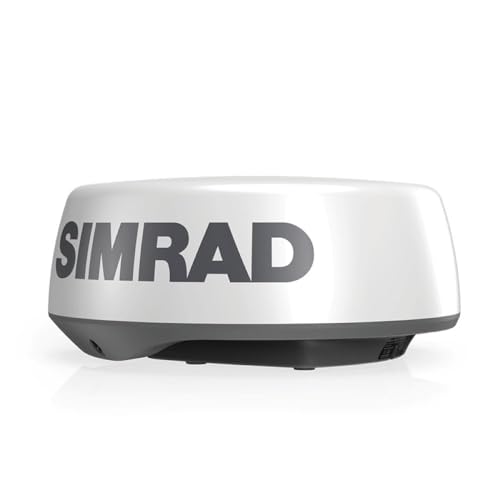
- 24 NM range for near and mid-range targets
- MARPA tracks up to 10 targets
- Compact dome with instant-on operation
Best For: Smaller boats needing compact radar awareness
Cellular Dock Camera Pick

- 4G LTE remote access with no Wi-Fi needed
- Solar powered with battery backup
- 4K video plus night vision and motion alerts
Best For: Remote docks and boats with cellular coverage
High-Speed Coastal Radar
Simrad HALO24 48-NM Dome Radar

- 48-nautical-mile radar range in a compact dome
- Dual Range mode shows near and far targets together
- 60 RPM close-range updates for collision avoidance
Best For: Boats needing fast radar awareness and collision tracking
Low-Light Camera System
YEOIZO Full-Color Night Vision Marine Camera

- Full-color night vision for dark-water viewing
- 5MP camera with 120-degree wide-angle coverage
- IP67 aluminum housing built for marine conditions
Best For: Night navigation, security, and reversing assistance
Rugged Chartplotter Camera
Simrad IP CAM-1 Stainless Marine Camera

- 316 stainless steel housing for saltwater durability
- 1080p camera with IR LEDs for night use
- Works with Simrad, Lowrance, and B&G systems
Best For: Chartplotter users wanting a tough integrated marine camera
Cellular Boat Security Hub – LocMarine Global LTE Monitoring
For an ocean marine surveillance system that focuses on security and remote status checks, this LocMarine hub is built to keep an eye on critical boat conditions from your phone. It combines LTE connectivity, GPS tracking, geofencing, and alerts for bilge, high water, shore power, speed, battery, and entry events, making it practical for owners who want broad monitoring without needing an NMEA network.
Best For: Boat owners who want a cellular, insurance-ready monitoring hub with broad alert coverage and minimal setup complexity.
Pros:
- Includes 4G/5G LTE technology for remote monitoring and alerts.
- Tracks key conditions like bilge, high water, shore power, GPS location, speed, and entry.
- Includes 6 months of monitoring service and all sensors.
- Designed for boating use with a rugged, USA-made build and 3-year warranty.
Cons:
- Requires a monitored service after the included period.
- Focused on boat security and status, not live video surveillance.
This is a strong fit if you want a connected monitoring hub that emphasizes practical alerts over camera-based oversight. It gives you a lot of core vessel security coverage in one package, especially for unattended boats.
Chartplotter Camera – Garmin GC 245 Surface-Mount
If you’re building an ocean marine surveillance system around onboard video, the Garmin GC 245 is a surface-mount marine camera that sends 1080p video to compatible Garmin chartplotters. It supports standard and reverse images, fish-eye or standard viewing, and full integration on the Garmin Marine Network or Garmin BlueNet Network, which makes it a clean option for users already in the Garmin ecosystem.
Best For: Garmin boat owners who want integrated marine camera feeds on compatible chartplotters.
Pros:
- 1080p Full HD output for clear marine camera feeds.
- Supports standard and reverse images.
- Can be mounted ball-up or ball-down.
- Integrates with Garmin Marine Network and Garmin BlueNet Network.
Cons:
- Requires compatible Garmin chartplotters for display.
- Video integration is ecosystem-specific rather than universal.
This camera is best viewed as a networked video component for a Garmin-based surveillance setup. If your helm already runs Garmin gear, it offers a straightforward way to add marine video visibility.
Wireless Starter Monitoring Kit – Oversea Boat Alert Bundle
For buyers comparing an ocean marine surveillance system that prioritizes fast alerts over hardwired installation, this starter bundle focuses on the essentials: battery, bilge high-water, and entry monitoring. The wireless setup uses replaceable AA batteries, needs no Wi-Fi, and is designed to deliver alerts to your smartphone in seconds, which makes it appealing for boats in storage, at the marina, or on the trailer.
Best For: Boat owners who want a simple, wireless alert system for core vessel risks.
Pros:
- Includes hub, battery sensor, bilge high-water sensor, and entry sensor.
- Wireless installation with no wiring required.
- No boat battery drain and no Wi-Fi needed.
- Alerts are designed to reach your phone quickly.
Cons:
- Uses a basic sensor bundle rather than a full camera system.
- Coverage is centered on monitoring alerts, not live video.
This bundle is a practical choice if you want a quick-start monitoring system that covers the most common boat risks. Its simplicity is the main advantage for owners who value easy installation and low maintenance.
Engine Room IP Camera – Garmin GC 200 Marine
When your ocean marine surveillance system needs a dedicated camera rather than sensor alerts, the Garmin GC 200 Marine IP Camera is aimed at monitoring areas inside and around the boat. The notes call out that it is especially suitable for the engine room, and its simple, high-quality construction makes it a straightforward add-on for onboard visibility.
Best For: Boat owners who want a simple marine IP camera for interior or engine-room monitoring.
Pros:
- Designed to monitor areas inside and around the boat.
- Especially suitable for engine room coverage.
- Simple to use.
- Built from high-quality material.
Cons:
- Supplied details do not list video resolution or network features.
- More limited product information than the other camera options here.
This is a basic marine camera choice for owners who want visual monitoring in key onboard spaces. It fits best when you need a practical camera for an internal area like the engine room rather than a full-featured surveillance platform.
Underwater CCTV Pick – Barlus 5MP POE Underwater Camera
If you need an ocean marine surveillance system for viewing below the surface, this Barlus underwater camera is built for direct water deployment and continuous recording. It uses IP68 waterproof construction, a 316L stainless steel enclosure, and a 32 ft cable, making it a practical choice for monitoring underwater activity from a boat or dock setup.
Best For: Monitoring underwater scenes, tanks, or fishing activity from a fixed marine setup.
Pros:
- IP68 waterproof design lets the camera go directly into the water.
- 5MP full HD image quality with white light and infrared light options.
- Includes a 1TB hard drive pre-installed in the NVR for recording.
- Designed for all-day operation with no charging required.
Cons:
- Primarily built for underwater viewing rather than wide-area surface surveillance.
- Uses a cable-based setup, so placement is less flexible than wireless systems.
This is a specialized marine camera for users who want direct underwater visibility and recorded footage. It stands out for durability and image quality, but it is best suited to a defined underwater monitoring task rather than general harbor security.
Marine Radar Pick – Simrad HALO20 Compact Radar
For a more traditional ocean marine surveillance system, the Simrad HALO20 radar adds dependable situational awareness for smaller boats and dayboats. Its 24 nautical mile range, pulse compression, and MARPA tracking make it a strong fit when you need radar visibility through fog, rain, or darkness.
Best For: Smaller boats and dayboats that need compact radar-based navigation support.
Pros:
- 24 NM detection range provides near- and mid-range visibility.
- Advanced pulse compression helps sharpen target definition.
- MARPA target tracking can monitor up to 10 targets at once.
- Instant-on readiness and preset modes simplify operation.
Cons:
- Requires compatible Simrad MFDs for use.
- Radar does not provide camera-style visual identification.
This is a solid choice when your priority is navigation awareness rather than video capture. The compact dome design and weather-ready performance make it especially useful for boat owners who want faster, clearer radar coverage in changing conditions.
Cellular Dock Camera Pick – Solace 4G LTE Solar Camera
If you want an ocean marine surveillance system for remote docks, marinas, or boats without Wi-Fi, this Solace 4G LTE camera is built around cellular access. It combines solar charging, battery backup, weather-resistant construction, and 4K Ultra HD monitoring so you can keep an eye on outdoor spaces from wherever coverage is available.
Best For: Remote waterfront monitoring where Wi-Fi is unavailable but cellular coverage is available.
Pros:
- 4G LTE connectivity supports remote access without Wi-Fi.
- Solar power with rechargeable battery backup helps reduce wiring needs.
- 4K Ultra HD video and night vision improve image detail.
- AI human detection and motion alerts help flag activity quickly.
Cons:
- Requires an active $24.99/month cellular data plan.
- Battery life and solar performance will depend on local conditions.
This camera is best when your monitoring point is isolated and you want simple remote visibility rather than a full wired system. Its biggest strengths are cellular access, solar operation, and weather protection for marine-adjacent locations.
High-Speed Coastal Radar – Simrad HALO24 48-NM Dome Radar
For an ocean marine surveillance system, the Simrad HALO24 is built to give you fast, wide-area radar awareness in a compact dome. It combines short-, mid-, and long-range detection with Dual Range mode, so you can track nearby collision risks while still watching distant weather or traffic.
Best For: Boaters who want a compact radar for real-time collision avoidance and long-range monitoring.
Pros:
- 48-nautical-mile range with compact 24-inch dome design
- Dual Range mode lets you monitor near and far targets at the same time
- 60 RPM rotation delivers a full 360° sweep every second at close range
- VelocityTrack provides instant movement feedback on targets in range
Cons:
- Requires compatible Simrad/Lowrance/B&G MFDs
- Radar-only system, so it does not provide camera-style visual imaging
Overall, the HALO24 is a strong fit when fast updates and dependable radar coverage matter more than anything else. Its instant wake-up, target tracking, and lightweight dome make it especially practical for performance-conscious boats that still need serious situational awareness.
Low-Light Camera System – YEOIZO Full-Color Night Vision Marine Camera
This marine surveillance system is aimed at boaters who want a camera view instead of radar-style detection. The YEOIZO marine camera uses full-color night vision, an ultra-low-light sensor, and a wide 120-degree view to help you see buoys, traps, bridges, kayakers, and other boats more clearly after dark.
Best For: Boat owners wanting a night-vision camera for forward viewing, reversing aid, and general marine security.
Pros:
- Full-color night vision with advanced CMOS and AI starlight processing
- 5MP imaging with up to 1000-meter night vision range
- 120-degree wide viewing angle for broad scene coverage
- IP67 waterproof aluminum alloy build for saltwater use
Cons:
- Wired setup requires HDMI, VGA, Ethernet, Wi-Fi, or ONVIF-compatible integration
- More camera-focused than radar-based for object detection at distance
As a marine camera, this model is best when visibility and recording matter most in darkness. Its full-color night mode and marine-grade housing make it a practical choice for surveillance, docking support, and nighttime navigation assistance.
Rugged Chartplotter Camera – Simrad IP CAM-1 Stainless Marine Camera
If you want an ocean marine surveillance system that integrates with chartplotters and fish finders, the Simrad IP CAM-1 is a practical option. Its 316 stainless steel housing is designed for saltwater environments, while the 1080p camera and IR LEDs support dark-area and night-time viewing.
Best For: Simrad, Lowrance, and B&G users who need a rugged marine camera for chartplotter integration.
Pros:
- 316 stainless steel housing for harsh saltwater conditions
- 1080p resolution with IR LEDs for night and dark-area operation
- 1.8mm wide-angle lens for broad coverage
- POE or 12V power options for flexible installation
Cons:
- Only one channel, so it is not a multi-camera system
- Wired Ethernet setup may be less convenient than a simpler standalone camera
This is a solid pick when durability and ecosystem compatibility are the top priorities. It is especially appealing if you already use compatible Simrad, Lowrance, or B&G equipment and want a marine camera built to handle tough conditions.
How We Picked the Best Ocean Marine Surveillance System
We looked for products that solve different parts of an Ocean Marine Surveillance System, including remote intrusion alerts, bilge and high-water monitoring, night visibility, chartplotter integration, and radar-based detection. Priority went to marine-ready builds, dependable connectivity, and features that fit both dockside and underway use.
Quick Comparison
Think of these picks in three groups: smart monitoring hubs for alerts and status updates, marine cameras for visual coverage in low light and harsh conditions, and radar systems for long-range situational awareness. The best choice depends on whether you need security, visibility, navigation support, or a combination of all three.
Key Buying Factors for an Ocean Marine Surveillance System
Connectivity and Alerting
For boats left unattended, LTE or cellular-enabled monitoring is especially useful because it can send alerts without relying on marina Wi-Fi. Look for systems that report battery status, bilge activity, water intrusion, shore power loss, motion, or entry events in near real time.
Image Quality and Low-Light Performance
If visual verification matters, choose cameras with strong night vision, full-color low-light performance, or wide dynamic range. For marine use, waterproof sealing, corrosion-resistant materials, and stable mounting matter as much as resolution.
Radar Range and Integration
For offshore awareness, radar extends coverage far beyond what cameras can see. Range, dome size, target separation, and compatibility with existing Simrad, Lowrance, or B&G systems should guide the decision. A radar unit is especially useful when fog, darkness, or distance limits camera usefulness.
Power, Storage, and Installation
Consider whether the system uses battery power, hardwired installation, POE, solar support, or local recording storage. A compact, easy-to-install setup is better for smaller boats, while larger vessels may benefit from a more integrated installation with multiple sensors and displays.
Who Should Buy Which Ocean Marine Surveillance System?
Buy a monitoring hub if your top concern is dockside security and remote alerts. Choose a marine camera if you want clear visual confirmation around the deck, helm, or underwater areas. Pick radar if you need wider offshore detection and navigation support. For many owners, the strongest Ocean Marine Surveillance System is a layered setup that combines monitoring, imaging, and radar rather than relying on one product alone.