Choosing the right ocean marine capstan winch can make anchoring, hauling, and deck work safer and far less exhausting. The best models balance pulling power, weather resistance, and control.
Below, we focus on options that suit different boat sizes and use cases, from compact electric units to heavy-duty marine systems.
Best 10 Ocean Marine Capstan Winch Picks for 2026
Portable Tow-Style Capstan
Endurance Marine Tugger 2 Portable 12V Capstan Winch

- 2000-lb pulling capacity
- 2.2 hp 12V DC motor
- 2" receiver hitch mount with moving fairlead
Best For: Portable pulling and towing tasks on a 12V setup
Compact Vertical Anchor Winlass
Lewmar V700 12V Vertical Windlass

- 700-lb maximum pull
- 316 stainless steel, IP67 housing
- Includes switch, breaker, solenoid, and handle
Best For: Compact anchoring on small powerboats and sailboats
Portable Gas Capstan Winch
Portable Winch PCW3000 Gas Capstan Winch
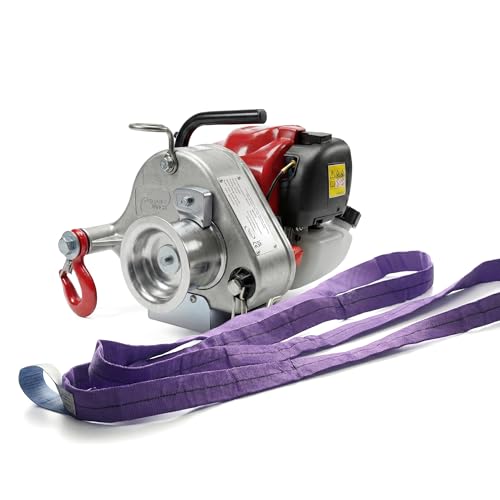
- 1,600-lb pulling force
- Honda GX35 4-stroke engine
- Unlimited rope length capstan design
Best For: Remote hauling and towing where portable power is needed
Complete Horizontal Anchor System
Five Oceans Atlantic 900 12V Windlass Kit
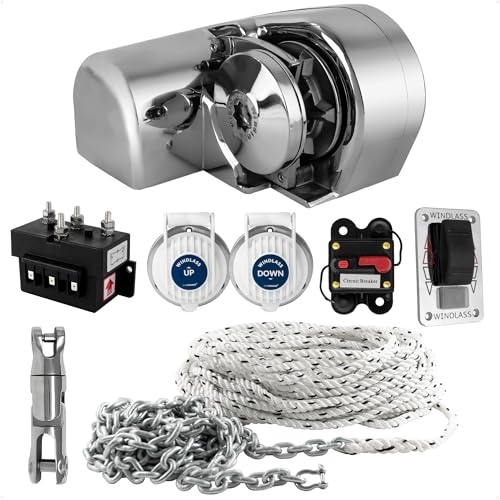
- 900W 12V motor with 1650-lb max pull
- Includes rope, chain, switches, breaker, and hardware
- 316 stainless steel housing with IP66 rating
Best For: All-in-one anchoring setup for small to mid-sized boats
Ocean Racing Pick
Lewmar Ocean Self Tailing Winch 16CST

- Self-tailing design for easier sail trimming
- Single-speed manual winch with 15.8:1 power ratio
- Chrome bronze drum with bronze/stainless steel construction
Best For: Sailors needing a compact, easy-to-service winch
Heavy-Duty Anchor Choice
Maxwell RC8-8 Windlass with Capstan
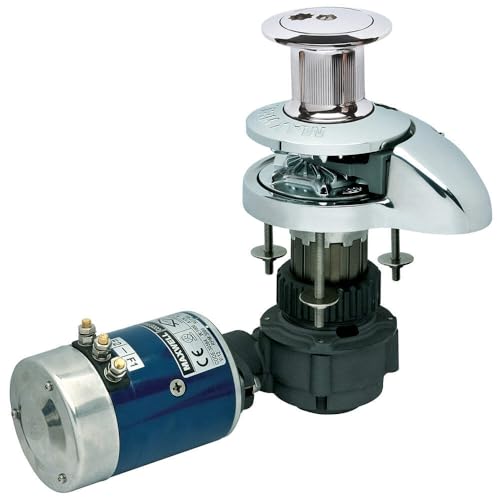
- 12V windlass with capstan for anchor handling
- Works with 5/16" chain and 9/16" or 5/8" rope
- Large, heavy marine unit for powered use
Best For: Boaters needing powered anchoring hardware
High-Capacity Sail Trimmer
Lewmar Ocean Self Tailing Winch 40CST
- Two-speed self-tailing winch for versatile trimming
- Larger size with stronger power ratio than Size 16
- Chrome bronze drum and stainless steel shafts
Best For: Sailors needing a larger two-speed winch
Helm-Operated Free-Fall Windlass
Powerwinch Class 36' Automatic System
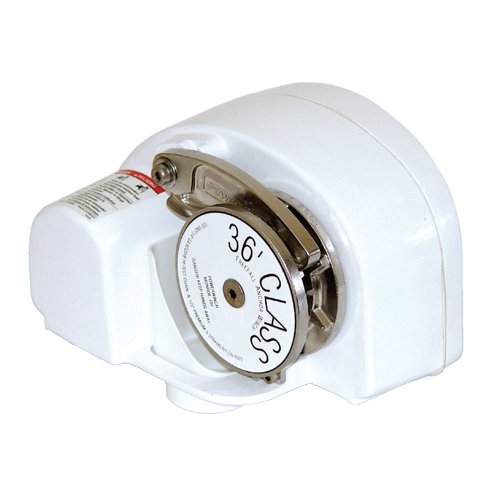
- Battery-free free-fall operation
- Stainless steel rope/chain guidance
- Watertight seals and steel fasteners
Best For: Boat owners wanting a durable automatic windlass for anchoring
Ocean Self-Tailing Winch
Lewmar Size 30CST Two-Speed Chrome

- Self-tailing design with low-friction feeder arm
- Two-speed gearing for easier trimming
- Tool-free cap removal for simpler servicing
Best For: Sailors needing a smooth, service-friendly manual winch
Best Simple Pick
Powerwinch Class 36' Automatic
- Helm-operated free-fall deployment
- No battery power needed for free-fall
- Simple automatic windlass package
Best For: Boaters seeking a straightforward automatic anchoring solution
Portable Tow-Style Capstan – Endurance Marine Tugger 2 Portable 12V Capstan Winch
If you need an ocean marine capstan winch for pulling tasks rather than anchoring, the Endurance Marine Tugger 2 is built around portability and a 12V DC motor. Its 2″ receiver hitch mount, moving fairlead, and 26 ft wiring harness make it a practical option for trailering, docking-area work, and other controlled hauling jobs where a compact setup matters.
Best For: Boat owners or operators who want a portable 12V capstan winch for pulling and towing tasks.
Pros:
- 2.2 hp, 12V DC motor with 2000-lb pulling capacity
- Portable design mounts to a 2″ receiver hitch
- Moving fairlead helps guide line during use
- 26 ft AWG cable included for installation
Cons:
- Designed for pulling jobs, not as a dedicated anchor windlass
- Requires a 12V power source
- Portable setup may not suit permanent deck installations
This model stands out when you want a compact, hitch-mounted capstan solution with a straightforward electrical setup. It is best treated as a dedicated pulling tool for users who value portability and unlimited line handling over a fixed marine anchoring system.
Compact Vertical Anchor Winlass – Lewmar V700 12V Vertical Windlass
For buyers comparing an ocean marine capstan winch against a purpose-built anchoring system, the Lewmar V700 is the anchoring-focused option here. It is a 12V vertical windlass for 1/4″ G4 chain with a fall safe gypsy, stainless steel construction, and IP67-rated housing, making it a compact choice for controlled anchor handling on smaller powerboats and sailboats.
Best For: Small to mid-sized boat owners who want a compact 12V vertical windlass for anchoring.
Pros:
- Designed for 1/4″ G4 chain with fall safe gypsy
- 316 stainless steel construction with IP67-rated housing
- Includes rocker switch, breaker, solenoid, and handle
- Compact vertical layout helps save deck space
Cons:
- Maximum pull is limited to 700 lbs.
- Made for anchoring, not general towing or hauling
- Best suited to boats in the 20′-30′ range per listing details
This windlass is a strong fit when you want a clean deck installation and a dedicated anchor-control solution. Its compact stainless build and included controls make it practical, but its lower pull rating means it is better matched to smaller boats and lighter anchoring loads.
Portable Gas Capstan Winch – Portable Winch PCW3000 Gas Capstan Winch
If you are shopping for an ocean marine capstan winch style tool that prioritizes portability and rope handling, the Portable Winch PCW3000 brings a gas-powered capstan design to heavy-duty pulling jobs. Its Honda GX35 engine, 1,600-lb pulling force, and unlimited rope length make it a flexible option for users who need steady hauling performance away from fixed power sources.
Best For: Remote hauling, towing, and other demanding pulling jobs where portability matters most.
Pros:
- Honda GX35 4-stroke engine for portable gas-powered operation
- 1,600-lb pulling force with 33 ft/min line speed
- Capstan drum design supports virtually unlimited rope length
- Can work with Block & Tackle systems for higher capacity applications
Cons:
- Gas-powered design may be less convenient than a 12V unit for some users
- Accessory-based capacity increases are not built-in
- Not a dedicated marine anchoring windlass
The PCW3000 is a practical choice when you need a compact, self-contained winch that can keep pulling without respooling. It is less about fixed marine installation and more about versatile, hard-use hauling where line length and mobility are priorities.
Complete Horizontal Anchor System – Five Oceans Atlantic 900 12V Windlass Kit
When you want an ocean marine capstan winch alternative for anchoring, this Five Oceans 12V DC electric boat anchor windlass is built as a complete horizontal system. The kit includes the windlass, rode, chain, switches, breaker, solenoid, and mounting hardware, so it suits buyers who want an all-in-one anchoring package for saltwater use.
Best For: Boat owners who want a complete 12V horizontal windlass kit with rode and hardware included.
Pros:
- 900W 12V motor with 1650-lb maximum limit pulling power
- Complete kit includes rope, chain, switches, breaker, and hardware
- 316 stainless steel housing with IP66 waterproof rating
- Single gypsy handles 5/16″ HT G4 chain and 9/16″ rope
Cons:
- Maximum working load is listed at 550 lb, below the peak pull rating
- Horizontal on-deck installation may not suit every bow layout
- Best recommended for boats in the 20 ft to 45 ft range
This is the most complete anchoring solution in the group, especially if you want matched components out of the box. Its marine-grade materials and included rode make setup easier, but it is still important to match the system to your boat size and expected load.
Ocean Racing Pick – Lewmar Ocean Self Tailing Winch 16CST
If you’re shopping for an ocean marine capstan winch for trimming sails efficiently, the Lewmar Ocean Self Tailing Winch 16CST is a compact, manual single-speed option built around low-friction, snag-free operation. Its self-tailing design, screw-on-cap construction, and chrome bronze drum make it a practical choice for sailors who want straightforward handling without extra complexity.
Best For: Sailors who want a smaller self-tailing winch with easy maintenance and smooth sail trimming.
Pros:
- Efficient feeder arm design helps reduce friction during use
- Self-tailing setup supports easier sail trimming
- Screw-on-cap and strip-from-the-top construction simplifies servicing
- Bronze center stem and stainless steel shafts add strength
Cons:
- Single-speed design limits gearing flexibility
- Size 16 may be too small for larger or heavier loads
- No-tools-required service is helpful, but it is still a manual winch
This model stands out as a well-made Lewmar ocean series winch for sailors who value dependable construction and easy upkeep in a smaller format. It is best suited to light-to-moderate trimming tasks rather than high-power applications.
Heavy-Duty Anchor Choice – Maxwell RC8-8 Windlass with Capstan
For buyers comparing an ocean marine capstan winch for anchoring tasks, the Maxwell RC8-8 Windlass with Capstan is a 12V setup designed for 5/16″ chain and 9/16″ or 5/8″ rope. Its larger footprint and heavy package weight suggest a substantial marine system intended for boaters who need powered anchoring hardware rather than a manual sail-trimming winch.
Best For: Boaters looking for a powered windlass-and-capstan combination for anchor handling.
Pros:
- 12V powered windlass with capstan included
- Supports 5/16″ chain plus 9/16″ or 5/8″ rope
- Substantial build size indicates a heavy-duty marine unit
- Suited to anchoring applications rather than line trimming
Cons:
- Package details are sparse compared with the other listings
- Much heavier and larger than a standard manual winch
- Not positioned as a self-tailing sail winch
This Maxwell model is the most specialized option here, aimed at powered anchor management with capstan capability. It makes the most sense if your priority is a 12V anchoring solution and you need compatibility with chain and rope sizes commonly used on boats.
High-Capacity Sail Trimmer – Lewmar Ocean Self Tailing Winch 40CST
If you need an ocean marine capstan winch for larger sail-handling jobs, the Lewmar Ocean Self Tailing Winch 40CST offers a two-speed layout with a strong power ratio and a larger drum size. The self-tailing system, efficient feeder arm design, and easy strip-from-the-top construction make it a solid fit for sailors who want controlled trimming with less fuss.
Best For: Sailors needing a larger two-speed winch with strong power for heavier trimming tasks.
Pros:
- Two-speed gearing adds flexibility for different loads
- Self-tailing design supports easier line handling
- Efficient feeder arm helps reduce friction and snagging
- Chrome bronze drum and robust internal materials support durability
Cons:
- Heavier and larger than the Size 16 model
- May be more winch than small-boat sailors need
- Manual operation still requires user effort
As the larger Lewmar option in this roundup, the 40CST is better matched to boaters who want extra control and gearing for harder trimming work. Its size and two-speed setup make it a stronger fit when a compact winch would feel underpowered.
Helm-Operated Free-Fall Windlass – Powerwinch Class 36' Automatic System
If you’re shopping for an ocean marine capstan winch-style solution for anchoring and retrieval, this Powerwinch windlass focuses on convenience and corrosion resistance. Its helm-operated free-fall design lets you drop anchor without drawing battery power, while stainless steel components and watertight seals are built for long-term marine use.
Best For: Boat owners who want an automatic free-fall windlass with corrosion-resistant construction and battery-saving operation.
Pros:
- Free-fall function does not need battery power, helping preserve onboard power.
- Stainless steel rope and chain guidance system adds durability.
- Watertight seals and stainless steel fasteners help resist corrosion.
- Heat-treated, oil-impregnated gears and stainless steel drive shafts support smoother operation.
Cons:
- Designed as a windlass, so it is not a manual self-tailing capstan-style winch.
- At 18.6 lb, it is a heavier component to handle during installation.
This is a practical pick if you want an automated anchoring system with marine-ready materials and less drain on your battery. The emphasis here is on reliable free-fall performance and durability rather than multi-purpose winching features.
Ocean Self-Tailing Winch – Lewmar Size 30CST Two-Speed Chrome
For buyers comparing an ocean marine capstan winch to a sail handling solution, this Lewmar Ocean Series winch stands out for smooth trimming and easy operation. The self-tailing design, two-speed gearing, and snag-free feeder arm are aimed at sailors who want efficient line handling with minimal friction.
Best For: Sailors who want a compact two-speed self-tailing winch with smooth line handling and tool-free servicing.
Pros:
- Self-tailing design with an efficient feeder arm helps reduce friction.
- Two-speed gearing gives flexibility for easier trimming.
- Screw-on-cap and strip-from-the-top construction allow removal without taking off the winch.
- Bronze drum and stainless steel shafts/gear spindles support strength and durability.
Cons:
- It is a manual winch, so it does not offer powered operation.
- Smaller size may be less suitable for heavier-duty anchoring tasks.
This is a strong choice if your priority is dependable sailing performance rather than anchor retrieval. Its build quality and easy maintenance features make it especially appealing for regular sail trimming on smaller to mid-sized setups.
Best Simple Pick – Powerwinch Class 36' Automatic
This Powerwinch model is another option to consider if you’re looking at an ocean marine capstan winch or similar anchoring setup. It uses the same helm-operated free-fall approach, which means anchor deployment can be done without battery power, and it includes the Class 36′ automatic windlass hardware in a compact package.
Best For: Boat owners who want an automatic helm-operated free-fall windlass with simple anchor deployment.
Pros:
- Helm-operated free-fall setup helps make anchor deployment straightforward.
- Does not need battery power for free-fall operation.
- Includes the Powerwinch Class 36′ automatic windlass assembly.
Cons:
- Supplied notes list basic package details rather than expanded performance specs.
- Material listing is plastic in the supplied details, which may matter to buyers prioritizing metal construction.
If you want a straightforward automatic windlass and value battery-saving free-fall operation, this model keeps the feature set focused. It is best judged as a simple, purpose-built anchoring tool rather than a feature-heavy marine winch system.
How We Picked the Best Ocean Marine Capstan Winch
For this roundup, we prioritized pulling capacity, power source, build quality, corrosion resistance, mounting style, and ease of use. We also considered whether each option makes sense for typical marine duty, not just raw specs. That means looking at real-world fit for anchoring, line handling, and general deck work on smaller boats, cruising vessels, and heavier-duty setups.
Quick Comparison
The strongest choices in an Ocean Marine Capstan Winch roundup usually fall into a few groups: portable pullers, electric windlasses, and self-tailing or capstan-style deck winches. Portable gas or DC models are better when flexibility matters. Electric windlasses are the better match for anchor handling and repeatable operation. Manual or self-tailing winches remain useful where mechanical simplicity and fine control are more important than automation.
Key Buying Factors for Ocean Marine Capstan Winch
Pulling Capacity
Make sure the rated load matches the actual jobs you plan to do. Light-duty hauling can be handled with smaller ratings, but anchor recovery and heavier line work benefit from more headroom. Capacity should be chosen conservatively, especially in wet or offshore conditions.
Power Source and Duty Cycle
DC electric units are convenient for routine marine use, while gas-powered portable winches are useful when you need mobility and don’t want to depend on vessel power. Manual and self-tailing designs offer control and simplicity, but they rely more on crew effort. Check whether the unit is intended for intermittent use, repeated pulls, or anchor-specific operation.
Marine Construction
Saltwater demands corrosion-resistant materials and sealed components. Stainless steel, marine-grade finishes, and high protection ratings matter because exposure to spray, moisture, and UV can shorten service life quickly. Hardware quality and maintenance access are just as important as the headline specs.
Rope, Chain, and Compatibility
Confirm that the winch or windlass matches your rope diameter, chain size, and deck layout. Some systems are designed for chain-to-rope combinations, while others focus on rope-only hauling. A mismatch here can reduce performance and increase wear.
Who Should Buy Which Ocean Marine Capstan Winch?
If you want a versatile option for general hauling, a portable or compact electric model may be the best fit. If your main job is anchor handling, a dedicated windlass is usually the smarter choice. If you prefer simple, durable mechanical control, a self-tailing winch can be ideal. For larger boats or heavier loads, choose the most robust Ocean Marine Capstan Winch you can install properly and power safely.
In short, pick the system that matches your boat size, load demands, and operating style rather than chasing the highest number on the spec sheet.