Choosing the right ocean freediving weight belt can make a big difference in comfort, trim, and safety underwater. The best options stay secure, release quickly, and flex naturally as you move.
Below, we focus on belt materials, buckle styles, and compatibility with common freediving and spearfishing setups so you can find the right match for your diving style.
Best 10 Ocean Freediving Weight Belt Picks for 2026
Quick-Release Control
Rubber Weight Belt for Freediving
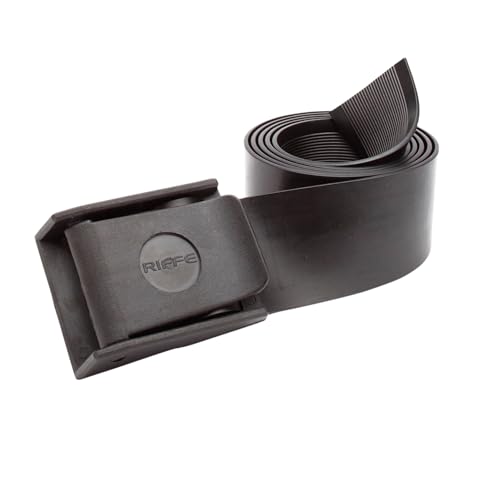
- 54-inch rubber belt can be trimmed for fit
- Quick-release lever helps with emergency ditching
- Ribbed inner design helps reduce weight shifting
Best For: Freedivers and spearfishers who want a secure, easy-release belt
Italian Silicone Comfort

- High-grade silicone is softer and less abrasive
- Stainless steel Marseillaise buckle with roller
- Resists UV, saltwater, heat, and chemicals
Best For: Divers who want a flexible, suit-friendly belt for saltwater use
Simple Secure Fit

- Quick-release nylon buckle for fast adjustment
- Rubber belt offers flexible comfort in the water
- Compatible with hard block and soft pocket lead weights
Best For: Divers who use different lead styles and want a simple adjustable belt
Flexible Saltwater Build

- 54-inch silicone belt can be trimmed for fit
- Stainless steel studs are corrosion-resistant and detachable
- Flexible design stays comfortable in cold or warm water
Best For: Freedivers and spearfishers wanting a flexible, trimmable belt
Heavy-Duty Rubber Stability
Scuba Choice Rubber Free Dive Weight Belt, Black

- Heavy-duty rubber construction
- Stainless steel secure buckle
- Self-compensating comfort at depth
Best For: Divers wanting a durable rubber belt with stable fit and adjustable comfort
Quick-Release Nylon Pick
Cressi Nylon Weight Belt with Hard Plastic Buckle
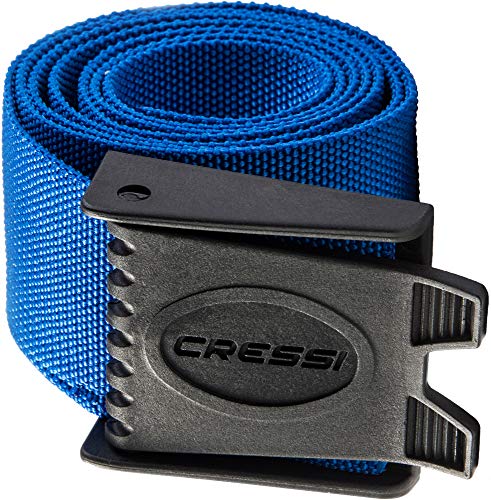
- Woven nylon belt with customizable length
- Quick-release buckle for emergency release
- Useful for freediving, spearfishing, and scuba
Best For: Divers prioritizing fast-release safety and a lightweight nylon strap
Simple Steel Buckle Value
Diving Weight Belt with Quick Release Stainless Steel Buckle
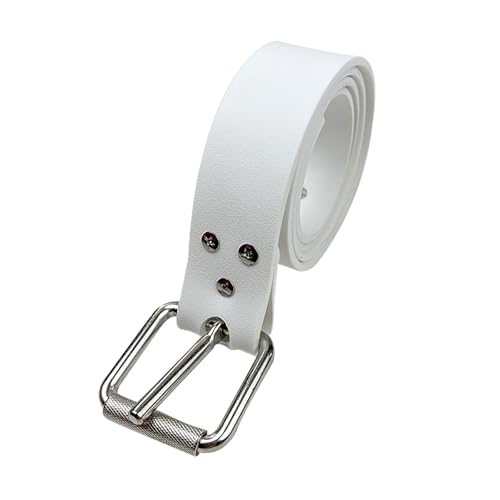
- Durable rubber construction
- Marseillaise stainless steel buckle
- Fits weight plates or pouches
Best For: Divers needing a straightforward rubber belt with flexible weight attachment
Simple Nylon Starter Belt
Scuba Choice 2" Nylon Weight Belt

- 2" nylon webbing for durable use
- 60" length can be cut to fit
- Quick-release plastic buckle for fast removal
Best For: Divers wanting a simple adjustable belt for freediving and snorkeling
Weighted Starter Kit

- Includes 4 coated weights plus 1 belt
- Corrosion-resistant vinyl-coated design
- Quick-release metal buckle on nylon strap
Best For: Divers wanting a complete belt-and-weights package
Dual-Belt Buoyancy Pack

- Includes 2 belts and 2 coated weights
- 58 x 2 inch adjustable belt size
- Quick-release hard plastic buckle
Best For: Divers who want two belts in one compact kit
Quick-Release Control – Rubber Weight Belt for Freediving
If you want an ocean freediving weight belt that stays put and is easy to ditch in a hurry, this Riffe rubber belt is built around those priorities. The 54-inch rubber body can be trimmed for fit, and the ribbed 2-inch design is made to hold weights securely while helping reduce shifting during the dive.
Best For: Freedivers and spearfishers who want a secure, quick-release rubber belt with adjustable fit.
Pros:
- Quick-release lever supports fast ditching in emergencies.
- Rubber belt with ribbed inner surface helps keep weights from shifting.
- 54-inch length can be cut down for a more custom fit.
- Anti-corrosive hardware is made for long-term ocean use.
Cons:
- Rubber construction may not be as soft as silicone alternatives.
- Maximum load is stated as up to 20 lbs.
Overall, this is a practical pick if safety and straightforward weight control matter most in the water. It keeps the focus on secure carry, fast release, and durable saltwater-ready construction.
Italian Silicone Comfort – Marseillaise Weight Belt
This ocean freediving weight belt is aimed at divers who want a softer feel and strong corrosion resistance. The Cressi silicone design is more flexible than rubber, with a stainless steel quick-release Marseillaise buckle and a roller for easier adjustment.
Best For: Divers who want a flexible silicone belt that is gentle on suits and built for saltwater conditions.
Pros:
- High-grade silicone is designed to be softer and less abrasive than rubber.
- UV, saltwater, heat, and chemical resistance support longer service life.
- Stainless steel quick-release Marseillaise buckle includes a roller for easier adjustment.
- 9-hole layout and 125 cm length help with size fitting.
Cons:
- Shorter than some 54-inch belts at 125 cm long.
- Heavier than some minimalist belt options at 440 g.
As a freediving and spearfishing belt, it stands out for comfort and material durability more than extreme simplicity. If you prefer silicone over rubber, this is a well-rounded option with a traditional buckle style.
Simple Secure Fit – Nylon Buckle Weight Belt
For an ocean freediving weight belt that emphasizes straightforward security and comfort, this Seac model keeps the setup simple. Its rubber body is paired with a durable nylon quick-release buckle, and the 51-inch length gives plenty of room for adjustment.
Best For: Divers who want a versatile belt for both hard block and soft pocket lead weights.
Pros:
- Nylon quick-release buckle supports fast adjustments and safer removal.
- Rubber belt is designed for flexible, body-conforming comfort.
- Works with both hard block and soft pocket lead weights.
- 51-inch length fits a wide range of divers.
Cons:
- Less specialized in material details than silicone or premium rubber alternatives.
- Color is not specified in the supplied details.
This is a practical all-around belt for divers who want compatibility and easy adjustment without extra complexity. It is a sensible choice if you use different lead styles and want a dependable quick-release buckle.
Flexible Saltwater Build – Silicone Diving Weight Belt
This ocean freediving weight belt is built for divers who want a flexible silicone feel and corrosion-resistant hardware. The 54-inch belt can be trimmed for fit, and the detachable stainless steel studs give it a practical, replaceable fastening setup.
Best For: Freedivers and spearfishers who want a trimmable silicone belt with stainless steel hardware.
Pros:
- Premium silicone stays flexible in cold or warm water.
- 54-inch length can be trimmed for a customized fit.
- Detachable stainless steel fastening studs add convenience and corrosion resistance.
- Designed for freediving, spearfishing, scuba diving, and snorkeling.
Cons:
- White color may not be the preferred look for every diver.
- Uses fastening studs rather than a traditional buckle design.
Overall, this belt makes sense if comfort, flexibility, and saltwater-ready materials are your top priorities. It is a versatile underwater belt for divers who want a customizable fit and straightforward hardware.
Heavy-Duty Rubber Stability – Scuba Choice Rubber Free Dive Weight Belt, Black
If you want an ocean freediving weight belt that stays comfortable as conditions change, this rubber option is built around that need. The heavy-duty rubber construction and stainless steel buckle are made for regular use in freediving and spearfishing, while the self-compensating design helps it adapt as your wetsuit compresses at depth.
Best For: Divers who want a durable, adjustable rubber belt with a secure stainless-steel buckle for freediving and spearfishing.
Pros:
- Durable rubber construction for tough diving conditions
- Stainless steel buckle for a secure, corrosion-resistant fit
- Self-compensating design helps maintain comfort as depth changes
- 61-inch length offers broad adjustability
Cons:
- Rubber belt may not suit divers who prefer a nylon feel
- No quick-release mechanism is highlighted in the supplied notes
This is a practical choice if your priority is dependable hold and depth-friendly comfort in a simple belt design. It looks especially well suited to divers who want a straightforward freediving setup without extra complexity.
Quick-Release Nylon Pick – Cressi Nylon Weight Belt with Hard Plastic Buckle
For an ocean freediving weight belt that emphasizes fast release and a simple fit, this Cressi nylon model is a strong practical option. The woven nylon strap is paired with a hard plastic buckle and a quick-release design, making it a straightforward choice for freediving, spearfishing, and even scuba diving.
Best For: Freedivers who want a lightweight nylon belt with a quick-release buckle and easy length customization.
Pros:
- Strong woven nylon construction
- Quick-release buckle for rapid emergency release
- Customizable length for preferred fit
- Works for freediving, spearfishing, and scuba diving
Cons:
- Hard plastic buckle may not appeal to divers who prefer metal hardware
- No rubber self-compensating stretch is mentioned
This belt is a good fit if fast release is a top priority and you want a lighter, low-fuss alternative to rubber belts. Its adjustable nylon build makes it versatile, but its standout advantage is the emergency-release buckle.
Simple Steel Buckle Value – Diving Weight Belt with Quick Release Stainless Steel Buckle
This ocean freediving weight belt keeps the formula simple: rubber construction, a stainless steel Marseillaise buckle, and an adjustable fit for different waist sizes. It is designed for freediving, scuba diving, and spearfishing, with a setup that also makes it easy to attach or remove weight plates or pouches as needed.
Best For: Divers who want a straightforward rubber belt with a stainless steel quick-release buckle and flexible weight setup.
Pros:
- High-quality rubber construction for durability
- Marseillaise stainless steel buckle for secure fit
- Adjustable design for different waist sizes
- Supports weight plates or pouches sold separately
Cons:
- No belt length beyond 53 inches is listed in the supplied notes
- Weight plates or pouches are not included
If you want a basic rubber belt with a proven steel buckle style, this one covers the essentials without adding complexity. It makes the most sense for divers who already know the weight setup they want and simply need a durable belt platform.
Simple Nylon Starter Belt – Scuba Choice 2" Nylon Weight Belt
If you want a straightforward ocean freediving weight belt, this Scuba Choice model keeps things simple: 2" nylon webbing, a 60" length you can cut to size, and a quick-release plastic buckle. It is built for scuba, snorkeling, and freediving, making it a practical option for divers who want basic weight control without extra complexity.
Best For: Divers who want an adjustable, easy-to-use belt for freediving, snorkeling, or scuba training.
Pros:
- 2" nylon webbing is made for durable, long-lasting use
- 60" length can be cut for a more customized fit
- Quick-release plastic buckle supports fast removal
- Works across scuba, snorkeling, and freediving use cases
Cons:
- Plastic buckle may not appeal to divers wanting metal hardware
- Sold as the belt only, without included weights
Overall, this is a no-frills belt for divers who value adjustability and easy handling over bundled extras. It covers the basics well and is a sensible starting point for controlled buoyancy in the water.
Weighted Starter Kit – Vinyl Coated Dive Weights Set
This ocean freediving weight belt option is really a bundled kit: four vinyl-coated weights plus a nylon belt with a quick-release metal buckle. The coated weights are meant to resist corrosion and have rounded edges, while the belt package gives you a ready-to-use setup for freediving, spearfishing, and general underwater use.
Best For: Divers who want a complete belt-and-weights package instead of buying components separately.
Pros:
- Includes 4 weights plus 1 belt for a complete starter setup
- Vinyl-coated weights are described as corrosion-resistant
- Rounded edges and compact size are aimed at comfort and easy carry
- Nylon belt uses a quick-release metal buckle
Cons:
- The kit is centered on a 1.1 lb / 0.5 kg weight size, so it may not suit all load preferences
- It is a packaged set, which may be less flexible than buying belt and weights separately
For divers who want a convenient all-in-one setup, this kit makes weight management easy to organize. It is especially useful if you prefer coated weights and a belt included in the same purchase.
Dual-Belt Buoyancy Pack – 2-Belt Dive Weight Set
If you are comparing an ocean freediving weight belt package for practical buoyancy control, this kit stands out for including two nylon belts and two vinyl-coated 500 g weights. The belts are adjustable to 58 x 2 inches and use a hard plastic quick-release buckle, making the set useful for divers who want a compact, seawater-resistant setup for freediving or spearfishing.
Best For: Divers who want two belts in one kit for simple setup, replacement, or shared use.
Pros:
- Kit includes 2 nylon dive weight belts and 2 coated weights
- 58 x 2 inch belt size is adjustable for different body types
- Hard plastic quick-release buckle supports emergency removal
- Vinyl-coated weights are made for freshwater and seawater use
Cons:
- Only 2 weights are included, so total load options are limited by the kit contents
- Plastic buckle may not be the choice for divers who prefer metal hardware
This is a useful bundle if you want a simple, durable belt setup with spare capacity in the box. The dual-belt format makes it especially practical for divers who want flexibility without assembling a kit piece by piece.
How We Picked the Best Ocean Freediving Weight Belt
We prioritized belts built for real dive use: secure closure, fast release, comfortable fit over a wetsuit, and materials that hold up in saltwater. We also looked at whether each Ocean Freediving Weight Belt supports a clean, stable weight distribution and whether it offers enough adjustability for different body types and suit thicknesses.
Quick Comparison
In general, rubber belts are the go-to choice for freediving because they stretch with your breathing and suit compression. Nylon belts can be a good budget or backup option, especially for lighter loads or casual use, but they may shift more during long dives. Buckle design matters too: quick-release metal buckles are often preferred for safety, while hard plastic options can be lighter and simpler.
Key Buying Factors for an Ocean Freediving Weight Belt
Material
Rubber is usually the best all-around choice for freediving and spearfishing because it stays put as your body compresses at depth. Silicone can also be flexible and comfortable, while nylon is more rigid and may ride up unless fitted carefully.
Buckle Type
Look for a buckle that is easy to open under stress. Stainless steel and other quick-release designs are popular for safety. If you prefer minimal hardware, plastic buckles can reduce bulk, but they should still feel secure and easy to operate with gloves.
Width and Fit
A wider belt usually spreads weight more comfortably across the hips. Make sure the belt fits snugly over your wetsuit without requiring constant adjustment. If you dive in different temperatures, choose a setup with enough length for seasonal suit changes.
Weight Compatibility
Check how your weights attach and whether the belt works well with coated lead, soft weights, or fixed weight pouches. A good belt should keep weight stable while still allowing easy removal if needed.
Safety and Visibility
For open-water diving, quick-release function and simple operation matter more than extra features. High-contrast buckles or easy-grip closures can also help if visibility is poor or you need to remove the belt fast.
Who Should Buy Which Ocean Freediving Weight Belt?
If you freedive regularly or spearfish in varying conditions, a rubber or silicone Ocean Freediving Weight Belt with a secure quick-release buckle is usually the best choice. If you are a beginner, occasional diver, or want a lower-cost option, a nylon belt can still work well as long as it fits properly and stays comfortable.
Divers using heavier loads should favor strong hardware and a belt that resists shifting, while those prioritizing simplicity may prefer lighter buckle systems and straightforward webbing. Choose the belt that best matches your suit thickness, dive depth, and safety priorities rather than the one with the most features.