Choosing the right ocean freediving mask can make a huge difference in comfort, equalization, and visibility at depth. The best options keep internal volume low, seal reliably, and feel stable on your face without creating pressure points.
Below, we focus on masks that suit freediving and spearfishing in real ocean conditions, with an eye on fit, field of view, durability, and practical features that matter before you drop below the surface.
Best 10 Ocean Freediving Mask Picks for 2026
Ultra-low volume Italian frameless pick

- Frameless design lowers internal volume
- Ergonomic nose supports equalization
- Twin tempered lenses widen view
Best For: Freedivers and spearfishers wanting a flexible low-volume mask
Wide-view stealth spearfishing option

- Single lens gives an extremely wide view
- Low internal volume keeps fit close
- Matte finish helps cut reflections
Best For: Spearfishers and freedivers who want broad visibility and low drag
Travel-friendly frameless all-rounder

- Frameless single lens with wide view
- Compact and lightweight for travel
- Adjustable buckles simplify fitting
Best For: Divers who want a compact, versatile low-volume mask
Low-volume comfort pick with mirrored lens
TUSA Sport Lapis freediving mask

- 145 cc skirt keeps internal volume low
- UV380 dual lenses with anti-fog treatment
- Adjustable straps and slide adjusters
Best For: Freedivers who want a low-volume dual-lens mask with modern lens features
Compact Low-Volume Dive Pick
Spearfishing Mask Low Volume Silicone
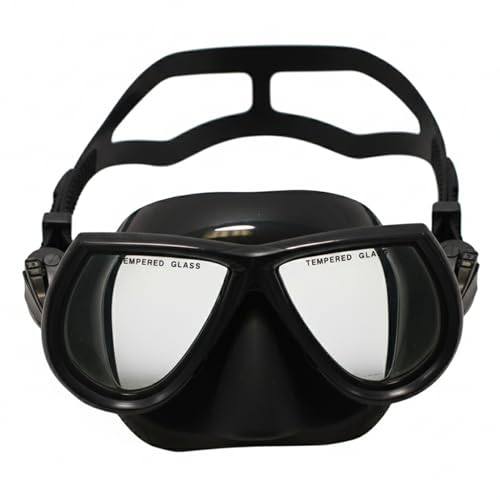
- Low-volume build for easier equalization
- Tempered glass lenses for clear vision
- Fits narrow faces with a silicone seal
Best For: Freedivers and spearfishers with smaller or narrow faces
Sleek Peripheral-View Choice

- Low-volume mask for freediving and spearfishing
- Excellent peripheral vision
- Silicone skirt overmolded on the frame
Best For: Divers prioritizing peripheral vision and a subtle, comfortable fit
Ultra-Low-Volume Performance Pick

- Internal volume under 80 cm3
- Wide field of vision with close lens placement
- Matte finish helps reduce glare
Best For: Freedivers and spearfishers wanting maximum low-volume performance
Ultra-Low Volume Performance

- Ultra low-volume build for easier equalization.
- 180° curved lens for wide, clear viewing.
- Includes travel case and anti-fog spray.
Best For: Freedivers and spearfishers who want low volume and panoramic vision.
Compact Dual-Lens Value
Kraken Aquatics Low-Volume Mask

- Low internal volume for easier equalization.
- Tempered-glass dual lenses with wider forward view.
- Hard case included for safer storage.
Best For: Divers wanting a compact all-around freediving mask with a case.
Ultra-low volume Italian frameless pick – Cressi Atom freediving mask
If you want an ocean freediving mask built around low volume and easy equalization, the Cressi Atom is aimed squarely at freedivers and spearfishers. Its frameless structure, ergonomic nose shape, and soft silicone build are all about reducing internal space while keeping the fit flexible and stable.
Best For: Freedivers and spearfishers who want an ultra-low-volume, flexible frameless mask.
Pros:
- Ultra-low internal volume helps reduce air requirements.
- Ergonomic nose shape is designed to make equalization easier.
- Frameless construction increases flexibility and face adaptation.
- Tempered-glass twin lenses provide a wider field of view.
Cons:
- Built for experts, so it may be less forgiving for casual users.
- Split silicone strap is secure, but simple rather than feature-heavy.
Overall, this is a focused performance mask for divers who prioritize minimal internal volume and a close, responsive fit. If your main goal is efficient freediving in the ocean, the Atom is a strong, no-nonsense choice.
Wide-view stealth spearfishing option – Mares Viper freediving mask
The Mares Viper is a practical ocean freediving mask for divers who want a low-volume fit with a very wide field of vision. Its single-lens design, matte finish, and hydrodynamic profile make it especially relevant for spearfishing and freediving where glare control and streamlined shape matter.
Best For: Spearfishers and freedivers who want a wide-view, low-volume single-lens mask.
Pros:
- Minimum internal volume helps the mask sit close to the face.
- Extremely wide field of vision improves awareness underwater.
- Matte finish adds anti-reflective benefits.
- Hydrodynamic profile helps reduce water resistance.
Cons:
- Single-lens design may not suit divers who prefer split windows.
- Geared toward spearfishing, so it is less general-purpose than some masks.
For divers who value visibility and a streamlined profile, the Viper checks the core boxes without extra bulk. It’s a solid pick if you want a purpose-built mask for active ocean use.
Travel-friendly frameless all-rounder – Cressi Musa low-volume mask
The Cressi Musa is a versatile ocean freediving mask for adults who want low internal volume, a wide view, and an easy travel setup. Its frameless, single-lens build and soft silicone skirt are designed for a watertight seal while keeping the mask compact and lightweight.
Best For: Freedivers, spearfishers, snorkelers, and divers who want a compact frameless mask for travel.
Pros:
- Low internal volume supports freediving and spearfishing use.
- Single tempered lens gives an expansive field of view.
- Compact, lightweight build is ideal for packing and travel.
- Micro-metrically adjustable buckles make fit changes easy.
Cons:
- Plastic frame materials may feel less premium than silicone-frame models.
- Less specialized than masks built purely for expert freedivers.
If you want one mask that can move between ocean diving activities, the Musa offers a balanced mix of visibility, portability, and simple adjustability. It is a sensible choice for travelers who still want a performance-minded fit.
Low-volume comfort pick with mirrored lens – TUSA Sport Lapis freediving mask
The TUSA Sport Lapis is built for freediving with a skirt that brings the lenses closer to your face and keeps internal volume down to 145 cc. It also adds a mirrored dual-lens setup, anti-fog treatment, and UV380 lens protection, making it a useful ocean freediving mask for divers who want comfort and modern lens features.
Best For: Freedivers and spearfishers who want a low-volume dual-lens mask with a mirrored lens.
Pros:
- Internal volume is listed at 145 cc for a close fit.
- Dual-lens design includes a UV380, anti-fog treated lens.
- Separated buckle design creates a cleaner, less bulky look.
- Adjustable straps and slide adjusters help secure the fit.
Cons:
- Dual-lens design may not feel as open as a single-lens mask.
- Mirrored lens styling may not be preferred by every diver.
As a low-volume mask with a few comfort and lens upgrades, the Lapis is a thoughtful option for divers who want a bit more than the basics. It stands out most if you value a secure fit and a modern finish.
Compact Low-Volume Dive Pick – Spearfishing Mask Low Volume Silicone
If you want an ocean freediving mask that keeps air space small and visibility clear, this low-volume silicone option is built for practical use in freediving, spearfishing, and scuba sessions. The dual-lens design, tempered glass, and adjustable strap aim for a secure fit without adding unnecessary bulk.
Best For: Freedivers and spearfishers with narrow faces or anyone wanting a simple low-volume mask for clear underwater vision.
Pros:
- Low-volume design helps reduce internal air space for easier breathing and equalization.
- Tempered glass lenses are made for clearer underwater vision and durability.
- Silicone skirt and adjustable strap are intended to improve comfort and seal.
- Designed to fit narrow faces well, including many women divers.
Cons:
- Best fit is geared toward narrower face profiles rather than all face shapes.
- Dual-lens layout may not suit divers who prefer a single-window view.
Overall, this is a straightforward low-volume mask choice for divers who want comfort, a secure seal, and dependable clarity without extra features. It looks especially practical for spearfishing and freediving where fit and reduced drag matter most.
Sleek Peripheral-View Choice – SEAC Raptor Low Volume Mask
The SEAC Raptor is a practical ocean freediving mask for divers who want a low-volume profile with strong peripheral vision and a subtle look. Its silicone skirt is overmolded on the frame, which supports comfort and a streamlined feel in the water.
Best For: Divers who want a low-volume mask with wide peripheral visibility and a clean, subtle design.
Pros:
- Low-volume construction supports freediving and spearfishing use.
- Excellent peripheral vision helps broaden underwater awareness.
- Silicone skirt overmolded on the frame is made for comfort and fit.
- Sleek styling gives it a clean, understated look.
Cons:
- Details are fairly minimal, so it may appeal most to buyers who already know the fit they want.
- Dual-lens layout may not be ideal for those seeking a single-lens mask.
As a balanced low-volume option, the Raptor focuses on comfort, vision, and a refined design rather than extra complexity. That makes it a solid pick for freedivers and spearfishers who want a dependable mask with a subtle profile.
Ultra-Low-Volume Performance Pick – Mares Samurai X Mask
If you need an ocean freediving mask built around easy equalization and a compact profile, the Mares Samurai X is designed with a very low internal volume and a close lens-to-eye distance. Its lightweight frame and matte finish also make it a strong fit for spearfishing in bright conditions.
Best For: Freedivers and spearfishers who want extremely low internal volume and a wide field of vision.
Pros:
- Internal volume under 80 cm3 supports easier equalization.
- Reduced lens-to-eye distance helps widen the field of vision.
- Lightweight frame with matte finish helps reduce glare.
- Integrated skirt buckles are designed to streamline fit and comfort.
Cons:
- Its performance-focused design may be less appealing if you want a more general-purpose mask.
- As a low-profile model, it is aimed more at freediving and spearfishing than casual use.
This is the most performance-driven option in the group, especially if minimizing internal volume is your top priority. For divers who care about vision, stealth, and efficient equalization, it offers a very focused design.
Ultra-Low Volume Performance – Tidal Glide Freedive Mask
If you want an ocean freediving mask built to minimize equalization effort, the Tidal Glide is designed around low-volume performance and a tight, comfortable seal. Its curved single-lens design aims to give you a wide, clear view while the silicone skirt and adjustable buckle help keep the fit stable for diving, spearfishing, and snorkeling.
Best For: Freedivers and spearfishers who want a simple, low-volume mask with panoramic visibility.
Pros:
- Ultra low-volume design helps reduce air needed for equalization.
- 180° distortion-free panoramic vision with curved lens technology.
- Double-sealed silicone skirt is made for a soft, anti-leak fit.
- Includes a travel case and anti-fog spray for easier trip prep.
Cons:
- Single-lens setup may not appeal to divers who prefer a dual-lens mask.
- Focuses on core freediving features rather than added extras like a camera mount.
Overall, this is a straightforward option for divers who value low internal volume, a secure seal, and broad underwater visibility. It keeps the feature set practical and centered on freediving efficiency.
Compact Dual-Lens Value – Kraken Aquatics Low-Volume Mask
This ocean freediving mask is built for divers who want a compact profile without giving up a familiar dual-lens layout. The low internal volume helps conserve air during equalization, while the silicone skirt, tempered glass lenses, and included hard case make it a practical pick for frequent use across freediving, spearfishing, snorkeling, and scuba diving.
Best For: Divers who want a low-volume, dual-lens mask with a protective storage case.
Pros:
- Low internal volume supports easier equalization during freedives.
- Double-lens design provides a more open forward view.
- Silicone skirt and strap are designed for a secure, watertight seal.
- Includes a durable hard storage case for protection between dives.
Cons:
- Dual-lens layout may not suit divers who prefer a single panoramic lens.
- Designed as a versatile all-around mask, not a feature-heavy specialty model.
For buyers comparing practical ocean freediving mask options, this one stands out for its compact feel and included case. It keeps the essentials focused on fit, safety, and everyday underwater versatility.
Camera-Ready Anti-Fog Pick – Tidal APEX Freedive Mask
If you want an ocean freediving mask that adds action-camera support without losing the low-volume diving profile, the Tidal APEX is built for that job. It combines pre-adhered anti-fog films, a reef-safe anti-fog spray, and a camera mount placed above the lenses so you can capture a first-person view without blocking your sightline.
Best For: Freedivers and spearfishers who want fog resistance and an integrated camera mount.
Pros:
- Pre-adhered anti-fog films help prevent fogging from the start.
- Integrated camera mount keeps the camera above the lenses and out of the view.
- Ultra low-volume design supports easier equalization on deeper dives.
- Dual tempered-glass lenses and a soft medical-grade silicone skirt support clarity and comfort.
Cons:
- Camera mount adds a specialized feature some divers may not need.
- Dual-lens design may not match the feel of a single-lens panoramic mask.
This is a strong choice for divers who want a practical freediving mask with extra fog control and recording capability. The included case, spray, and warranty make it feel well prepared for regular use.
How We Picked the Best Ocean Freediving Mask
We prioritized low-volume designs, soft and flexible skirt materials, strong seal potential, and frames that sit close to the face. For an Ocean Freediving Mask, these factors matter because they reduce the air needed to equalize and help the mask stay comfortable through repeated descents.
We also looked for broad visibility, simple strap adjustments, and build quality that makes sense for regular saltwater use. Features like anti-fog treatment, anti-glare materials, and included cases can add convenience, but they matter less than fit and internal volume.
Quick Comparison
In this group, frameless and mono-lens masks tend to offer the best low-volume performance and a wide, unobstructed view. Models with thicker frames or camera mounts may appeal more to recreational divers who want extra features, while pure freediving-focused masks usually stay simpler and lighter.
If you’re comparing options, start by asking whether you want maximum hydrodynamics, a wider field of view, or a bit more versatility for snorkeling and general diving. That answer will narrow the field quickly.
Key Buying Factors for an Ocean Freediving Mask
Internal Volume
Lower internal volume generally makes equalization easier and can improve performance at depth. For freediving, this is one of the most important specifications to check.
Fit and Seal
A mask can look perfect on paper and still fail if the skirt doesn’t seal on your face shape. The best Ocean Freediving Mask is the one that sits evenly without leaking or creating hot spots around the nose and cheeks.
Field of View
Wide vision helps with buddy awareness, target spotting, and overall confidence underwater. Mono-lens masks often feel more open, though some divers still prefer the familiar feel of dual-lens options.
Skirt Material and Strap Design
Soft silicone usually provides a better seal and more comfort than stiffer materials. A secure, easy-to-adjust strap is also important, especially when changing conditions or wearing gloves.
Extra Features
Some masks add anti-fog coatings, anti-glare finishes, or camera mounts. These can be useful, but only if they don’t compromise the core qualities of a good freediving mask.
Who Should Buy Which Ocean Freediving Mask?
If you want the most straightforward freediving setup, choose a simple low-volume frameless or mono-lens style. If you also snorkel or want a more versatile everyday dive mask, a lightweight hybrid design may suit you better.
Spearfishers often benefit from masks that emphasize stealth, a secure seal, and low profile construction. Divers who film their dives may prefer a camera-mount option, but only if they’re comfortable trading a little simplicity for that feature.
For most buyers, the smartest move is to choose the Ocean Freediving Mask that matches your face shape first, then compare volume, view, and extras second. Fit always wins.