When you’re offshore, the right distress beacon can make all the difference. An ocean EPIRB emergency beacon is built to alert rescuers quickly, even when voice calls and standard radios can’t reach help.
Below, we’ve narrowed the field to 10 strong options for boaters who want dependable satellite alerting, easier deployment, and the features that matter most at sea.
Best 10 Ocean Epirb Emergency Beacon Picks for 2026
Ultimate Offshore Safety Kit
ACR GlobalFix V6 RLS EPIRB Survival Kit

- Includes EPIRB, PLB, ditch bag, and signaling gear
- FCC-approved distress signaling with GPS tracking
- 5-year warranty and complete emergency bundle
Best For: Offshore boaters who want a full survival kit
Compact Beacon Pick
rescueME EPIRB1 Smallest EPIRB for Boating

- 30% smaller than many competing EPIRBs
- 66-channel GPS with quick-release bracket
- 10-year battery life and 48+ hour runtime
Best For: Boaters needing a compact, no-subscription beacon
High-Tech AIS Beacon
rescueME EPIRB3 with AIS, RLS, and GPS

- AIS and GPS help deliver precise location updates
- RLS confirms your distress signal was received
- Visible and IR strobes with NFC monitoring
Best For: Boaters wanting advanced rescue and tracking features
Beacon and Ditch Bag Combo
ACR GlobalFix V6 EPIRB with RapidDitch Bag

- Includes EPIRB plus buoyant RapidDitch Express Bag
- Subscription-free distress signaling with RLS confirmation
- GNSS/GPS tracking and NFC/app connectivity
Best For: Boaters who want a beacon plus grab-and-go storage
Compact PLB for fast activation
rescueME PLB1 Personal Locator Beacon

- 30% smaller than the next smallest beacon
- One-handed operation for emergencies
- 7-year battery with no subscription
Best For: Users who want a compact personal distress beacon for marine and land emergencies
EPIRB survival bundle with AIS
ACR GlobalFix V5 AIS EPIRB Kit

- AIS and 406 MHz distress signaling
- Includes RapidDitch Express abandon-ship bag
- 10-year battery and 48-hour operation
Best For: Boaters who want a full EPIRB kit with local AIS locating and stored emergency gear
Full EPIRB safety kit
ACR GlobalFix V6 EPIRB Survival Kit

- GlobalFix V6 RLS EPIRB included
- Adds strobe, mirror, whistle, and flare gear
- Includes RapidDitch Express bag
Best For: Mariners who want a beacon-centered kit with multiple backup signaling tools
Compact Offshore Backup

- RLS confirms the distress signal was received.
- GPS, Galileo GNSS, and MEOSAR compatible.
- 5-year battery life with 24+ hours runtime.
Best For: Boat crews and outdoor users wanting a compact personal beacon.
Fixed-Mount Ocean Beacon

- 406 MHz EPIRB with MEOSAR and 121.5 MHz homing.
- RLS, NFC, and mobile app support.
- 10-year battery life with fixed boat mounting.
Best For: Boat owners needing a mounted EPIRB with long battery life.
Local AIS Plus Global Alert
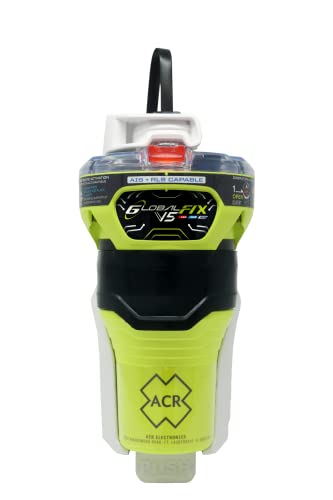
- AIS alert reaches nearby AIS-equipped vessels.
- RLS and GPS support global rescue signaling.
- 10-year battery and 48 hours runtime.
Best For: Boaters wanting local AIS visibility alongside satellite rescue signaling.
Ultimate Offshore Safety Kit – ACR GlobalFix V6 RLS EPIRB Survival Kit
If you’re shopping for an ocean epirb emergency beacon setup with more than just the beacon itself, this ACR survival kit bundles the GlobalFix V6 RLS EPIRB with handheld and visual signaling gear. It is built around FCC-approved distress signaling, GPS tracking, and a full ditch bag package for critical maritime emergencies.
Best For: Boat owners who want a complete offshore emergency response kit with beacon, PLB, and signaling accessories.
Pros:
- Includes the GlobalFix V6 RLS EPIRB plus a ResQLink 410 RLS PLB for layered emergency signaling.
- Offers GPS tracking and FCC-approved distress signaling for faster, more accurate rescue support.
- Comes with a RapidDitch Express Bag, strobe lights, mirror, and whistle for broader survival readiness.
- 5-year warranty adds useful coverage for a premium safety bundle.
Cons:
- Bigger and heavier than a standalone beacon at 6 pounds.
- May be more kit than needed if you only want a basic EPIRB.
This is a strong pick if you want a turnkey maritime safety package rather than a single beacon. The included gear makes it especially practical for serious cruising and offshore use.
Compact Beacon Pick – rescueME EPIRB1 Smallest EPIRB for Boating
The rescueME EPIRB1 is a practical ocean epirb emergency beacon for boaters who want a compact device without giving up core rescue features. Its 66-channel GPS, quick-release bracket, and 48+ hour operating life make it a straightforward choice for emergency readiness on smaller boats or tight storage spaces.
Best For: Boaters who want a small, no-subscription EPIRB with long battery life and fast activation.
Pros:
- Very compact design, about 30% smaller than competing EPIRBs.
- 66-channel GPS helps provide highly accurate location signaling.
- Quick-release bracket and pull-out antenna support fast deployment.
- 10-year battery life and 48+ hours of continuous operation.
Cons:
- It is a standalone beacon, so you will need other safety gear separately.
- No subscription is required, but registration and proper setup still matter.
If space is limited, this model stands out for keeping the emergency basics simple and compact. It is a sensible buy for everyday boat safety and long-term storage on board.
High-Tech AIS Beacon – rescueME EPIRB3 with AIS, RLS, and GPS
For buyers comparing an ocean epirb emergency beacon with modern tracking features, the rescueME EPIRB3 brings together AIS, RLS, GPS, and 406 MHz signaling in a rugged waterproof design. It is aimed at faster rescue coordination, including assistance from nearby vessels and compatibility with MEOSAR coverage.
Best For: Experienced boaters who want a feature-rich beacon with AIS, RLS, and satellite-based rescue support.
Pros:
- AIS technology can help nearby boats receive precise location updates.
- RLS confirms that your distress signal has been received.
- Includes 406 MHz and 121.5 MHz signaling plus visible and IR strobe lights.
- Supports NFC monitoring and is designed for rugged, waterproof use.
Cons:
- Feature-rich design may be more complex than a basic EPIRB.
- Heavier than the smallest compact models at 1.55 kg.
This is a strong choice if you want a modern beacon with layered rescue technologies. It is especially appealing for offshore use where extra signaling and confirmation features can matter.
Beacon and Ditch Bag Combo – ACR GlobalFix V6 EPIRB with RapidDitch Bag
This ACR bundle is a practical ocean epirb emergency beacon option if you want the beacon and a quick-access abandon-ship bag together. The GlobalFix V6 EPIRB adds subscription-free distress signaling, RLS confirmation, and GNSS/GPS tracking, while the RapidDitch Express Bag helps keep essential gear organized for fast evacuation.
Best For: Boaters who want a reliable EPIRB paired with a buoyant ditch bag for emergency grab-and-go readiness.
Pros:
- GlobalFix V6 EPIRB provides reliable emergency signaling without a subscription.
- RLS support confirms distress alerts are received.
- GNSS/GPS tracking and NFC/app connectivity add useful modern functionality.
- RapidDitch Express Bag keeps survival gear compact and easy to access.
Cons:
- Only two items are included, so it is less complete than a larger survival kit.
- At 6 pounds, it is not the lightest option to store on board.
For boaters who want a balanced mix of beacon performance and evacuation storage, this combo makes sense. It keeps the focus on fast deployment and core emergency essentials rather than extra accessories.
Compact PLB for fast activation – rescueME PLB1 Personal Locator Beacon
If you want an ocean epirb emergency beacon option that prioritizes portability and fast use, the rescueME PLB1 is built for exactly that kind of emergency. It is a very compact personal locator beacon with one-handed operation, making it easier to activate when conditions are stressful and space is limited.
Best For: Sailors, paddlers, and offshore travelers who want a small, no-subscription distress beacon with long battery life.
Pros:
- Very compact design at just 4 oz, with a lifejacket mounting clip included.
- One-handed operation is useful in difficult emergencies.
- Waterproof to 49 feet and built for challenging conditions.
- Includes a 66-channel GPS receiver and a high-intensity strobe light.
Cons:
- It is a PLB, not a full EPIRB-style survival kit.
- Designed for personal use, so it does not include extra ditch-bag gear.
Overall, this is a practical choice if your priority is a compact, easy-to-carry beacon with 24+ hours of operation and a 7-year battery. The no-subscription model keeps ongoing ownership simple, especially for users who want dependable distress signaling without extra service costs.
EPIRB survival bundle with AIS – ACR GlobalFix V5 AIS EPIRB Kit
For buyers comparing an ocean epirb emergency beacon with added rescue support, the ACR GlobalFix V5 AIS EPIRB Survival Kit combines satellite distress signaling with local AIS locating. It also includes a RapidDitch Express bag, so you get a more complete abandon-ship package rather than the beacon alone.
Best For: Boaters who want a full EPIRB kit with AIS, GPS, and included ditch-bag storage.
Pros:
- Includes a GlobalFix V5 AIS EPIRB with manual release bracket.
- Offers AIS, 406 MHz satellite connectivity, and 121.5 MHz homing signal.
- RLS support provides distress message confirmation.
- Bundle includes a buoyant RapidDitch Express abandon-ship bag.
Cons:
- Bulkier than a standalone beacon because it is a full survival kit.
- More features may be more than needed for casual coastal users.
This kit stands out when you want both the beacon and the supporting gear in one purchase. The no-subscription design, 10-year battery, and 48 hours of operational life make it a strong option for serious boating safety planning.
Full EPIRB safety kit – ACR GlobalFix V6 EPIRB Survival Kit
If you want an ocean epirb emergency beacon plus extra signaling gear, the ACR GlobalFix V6 EPIRB Survival Kit is built as a complete maritime emergency package. It centers on the GlobalFix V6 RLS EPIRB and adds multiple visibility and signaling tools for a more layered response.
Best For: Mariners who want a beacon-focused survival kit with added visual and whistle signaling tools.
Pros:
- Includes a GlobalFix V6 RLS EPIRB with FCC approval.
- Comes with a RapidDitch Express bag for organized emergency storage.
- Added signaling gear includes strobe lights, a signal mirror, and a whistle.
- Includes an electronic flare with flag and life jacket light.
Cons:
- More of a kit than a standalone beacon, so it takes more storage space.
- Designed for emergencies, so it may be more equipment than some boaters need.
As a complete distress package, this kit makes sense when redundancy matters and you want more than a beacon alone. The mix of EPIRB, strobes, mirror, whistle, and ditch bag gives you several ways to signal for help in harsh conditions.
Compact Offshore Backup – ACR ResQLink 410 RLS
If you want an ocean epirb emergency beacon alternative for personal use, the ACR ResQLink 410 RLS is built for fast SOS signaling with no subscription required. It combines GPS, Galileo GNSS, and MEOSAR compatibility with Return Link Service so you get confirmation that Search and Rescue received the distress alert.
Best For: Boat crews and coastal adventurers who want a lightweight personal beacon with global coverage and confirmation of rescue signal receipt.
Pros:
- Return Link Service confirms the distress signal has been received.
- GPS, Galileo GNSS, and MEOSAR compatibility support global coverage.
- 5-year battery life and 24+ hours of operational life.
- Built-in buoyancy, plus strobe and infrared strobe lights for visibility.
Cons:
- Designed as a personal locator beacon, not a fixed EPIRB mount system.
- Works best when you are carrying it on your person or gear.
This is a strong fit if you want a compact emergency beacon with broad satellite support and helpful visual signaling. The included clip system also makes it easy to attach for quick access when conditions turn urgent.
Fixed-Mount Ocean Beacon – ACR GlobalFix V6 EPIRB
For a true ocean epirb emergency beacon in a boat-mounted setup, the ACR GlobalFix V6 EPIRB is designed for global satellite distress signaling with no subscription required. It adds Return Link Service, GPS, Galileo, GLONASS, and 121.5 MHz homing support, giving search-and-rescue teams multiple ways to locate a vessel in trouble.
Best For: Boat owners who want a fixed EPIRB with long battery life, mobile data access, and global emergency coverage.
Pros:
- 406 MHz COSPAS-SARSAT distress signal with MEOSAR compatibility.
- RLS confirms the emergency alert has been received.
- 10-year battery life for long-term reliability.
- NFC and mobile app access make beacon data easy to review.
Cons:
- Cat 2 manual release bracket means it is intended for fixed installation on a boat.
- Heavier and bulkier than a personal locator beacon.
This model is geared toward serious boating use where a mounted beacon and precise homing signals matter. If you want a purpose-built EPIRB with modern data access and long service life, it is one of the most complete options here.
Local AIS Plus Global Alert – ACR GlobalFix V5 AIS EPIRB
The ACR GlobalFix V5 AIS EPIRB is a strong ocean epirb emergency beacon choice if you want both global satellite distress signaling and a local AIS alert for nearby vessels. It sends AIS distress alerts on VHF to AIS-equipped vessels within about a 5-mile radius, while also using GPS and Return Link Service for broader rescue support.
Best For: Boaters who want an EPIRB with AIS visibility for nearby traffic plus satellite distress signaling for search and rescue.
Pros:
- AIS distress alerts can be received by nearby AIS-equipped vessels.
- RLS confirms that Search and Rescue received the emergency signal.
- 10-year battery and 48 hours of operational battery life.
- NFC lets you check beacon data from a mobile device.
Cons:
- AIS range is limited to nearby receivers and conditions apply.
- Requires a panel-mount style installation on a boat.
This is the most layered option of the group because it combines local vessel awareness with satellite rescue signaling. For boaters who want extra ways to be noticed, that added AIS channel can be a meaningful advantage.
How We Picked These Ocean Epirb Emergency Beacon Options
We focused on beacon types and kits that make sense for real-world offshore use: strong global distress signaling, fast activation, clear visibility features, and practical mounting or grab-and-go storage. We also looked for models with useful modern additions such as GPS, Return Link Service, AIS, and survival-kit bundling where they add value.
Because the best choice depends on how and where you boat, we prioritized options for solo sailors, coastal cruisers, offshore passagemakers, and crews who want a more complete abandon-ship setup.
Quick Comparison
If you want the simplest answer, start by separating your needs into two buckets: personal locator beacons for individual crew members and EPIRBs for vessel-level distress alerting. A compact PLB is easier to wear and carry, while a true EPIRB is the better fit for a boat that may need to be abandoned. Kits with ditch bags and signaling gear are most useful when you want one purchase to cover more of the emergency checklist.
For an Ocean Epirb Emergency Beacon, compare battery life, activation style, and whether the unit includes GPS or extra location aids like AIS and strobe/infrared visibility. These features can speed up detection and improve tracking once a rescue is underway.
Key Buying Factors for Ocean Epirb Emergency Beacon
Activation and Mounting
Look at whether the beacon is manual release, automatic float-free, or both. Manual brackets are common for controlled stowage, while quick-release and grab-bag setups can help in a rapid abandon-ship scenario.
Location Features
GPS is a major advantage because it helps rescuers narrow your position faster. AIS can improve local detection by nearby vessels, while Return Link Service provides confirmation that your distress signal has been received. For many buyers, the best Ocean Epirb Emergency Beacon balances these features rather than relying on one signal type alone.
Battery Life and Operating Time
Long battery life matters, but so does the claimed transmit duration after activation. Offshore use calls for confidence that the beacon will keep working long enough for search and rescue to respond.
Visibility and Redundancy
Strobes, infrared visibility, and 121.5 MHz homing signals add layers of backup. These are especially valuable at night, in rough seas, or when search crews need a closer final fix.
Who Should Buy Which Ocean Epirb Emergency Beacon?
If you want a vessel-centric solution, choose a full EPIRB with GPS and a reliable release bracket, or a survival-kit bundle if you also want ditch bag essentials in one package. If you need something personal and wearable, a PLB makes more sense for crew members or dinghy use.
For offshore sailors and passagemakers, premium models with RLS, AIS, and strong visibility features are worth the extra attention. Coastal boaters may be satisfied with a simpler Ocean Epirb Emergency Beacon, but anyone heading far from shore should favor the most complete location and signaling package they can reasonably carry.