A good sleeping pad can make the difference between waking up refreshed and spending the night cold, sore, and restless. The best ultralight sleeping pads balance low weight and packed size with enough cushioning, insulation, and durability for your trips.
This roundup compares 10 lightweight options, including insulated air pads, built-in-pump designs, and the simple reliability of closed-cell foam. Use the guide below to narrow your choice by season, sleeping style, and backpacking priorities.
Best 10 Ultralight Sleeping Pads Picks for 2026
Best Insulated Comfort

- 5.2 R-value with 3.2-inch thickness
- 22 ounces and packs very small
- Includes pump sack and repair kits
Best For: Backpackers wanting warm, cushioned inflatable comfort
Best Foam Value
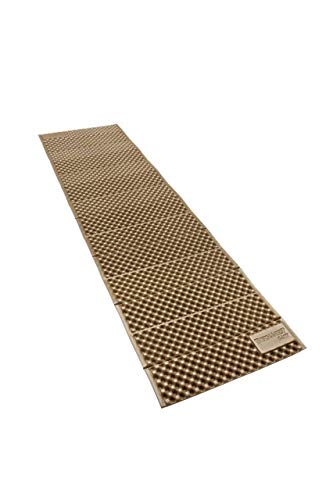
- Lightweight 14-ounce closed-cell foam
- Folds into a compact accordion shape
- No inflation required and water resistant
Best For: Minimalist hikers wanting durable, simple ground protection
Best Cold-Weather Insulation

- 4.6 R-value for high insulation
- 3.2-inch thickness and roomy 22.8-inch width
- Includes inflation bag and repair allowance
Best For: Cold-weather campers prioritizing warmth and cushioning
Best Budget Inflatable
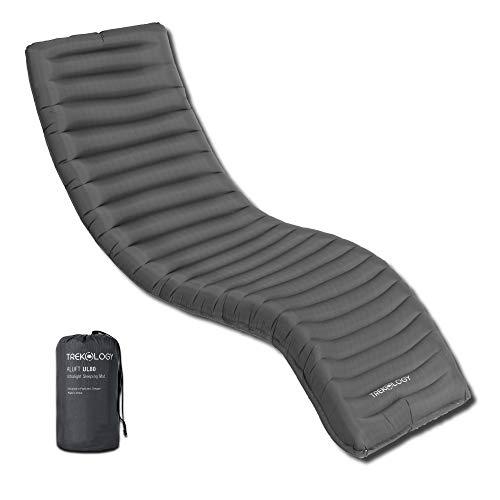
- Four-inch thickness with contoured support
- Roomy 75.2-by-22.4-inch sleeping surface
- Packs small for warm-weather trips
Best For: Warm-season campers seeking affordable inflatable comfort
Quick-Comfort Pick

- 4-inch thickness with built-in pillow
- Integrated pump inflates in about 30–60 seconds
- 1.8 pounds and packs to about 10 by 4 inches
Best For: Campers wanting fast setup and built-in head support
All-Season Insulation Pick

- 7.2 R-value for year-round ground insulation
- 4 inches thick with a 330-pound capacity
- 2 pounds and packs about the size of a water bottle
Best For: Campers prioritizing warmth and support across seasons
Fastest Setup Pick

- Foot-operated built-in pump inflates in about 20 seconds
- 30 ounces with included carry bag and repair patches
- Hexagon design and side buttons support flexible use
Best For: Light packers who want rapid, pump-free inflation
Best Insulated Value

- R-value 3.5 for three-season camping
- 3.1-inch ergonomic cushioning
- Includes pump sack and repair patch
Best For: Three-season backpackers wanting insulated comfort
Best Ultralight Warmth

- R-value 4.0 with ASTM verification
- About 15 ounces and water-bottle sized
- 3.15-inch mummy-shaped cushioning
Best For: Ultralight trips needing extra insulation
Best Built-In Pump
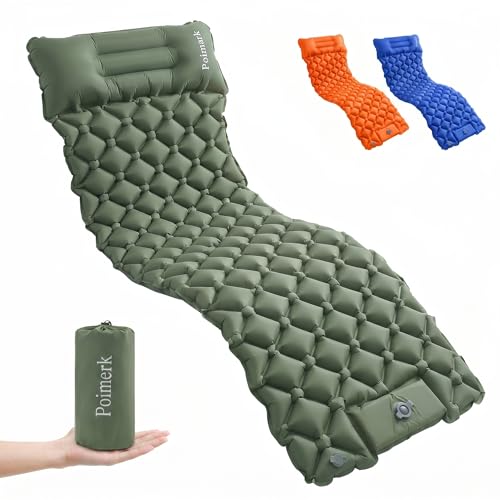
- Inflates with a built-in foot pump
- Includes an ergonomic pillow
- Connects to a second pad
Best For: Convenience-focused camping and travel
Best Insulated Comfort – ApolloAir 5.2 R-Value
The Gear Doctors ApolloAir is a strong choice among ultralight sleeping pads when you want substantial cushioning without giving up packability. It weighs 22 ounces, measures 3.2 inches thick, and includes a pump sack for inflation in under two minutes.
Best For: Backpackers seeking a comfortable, insulated inflatable pad for three-season use and colder conditions.
Pros:
- 5.2 R-value and 3.2-inch thickness provide insulation and cushioning.
- Packs to approximately 8.5 inches by 3 inches.
- Includes a matched-valve pump sack, repair kits, and airflow-adjustment needle.
- 40D nylon fabric with water-resistant coating is designed for durability.
Cons:
- Requires inflation with the included pump sack; it is not self-inflating.
- Its 22-ounce weight is higher than some minimalist foam pads.
The ApolloAir prioritizes warmth and sleeping comfort while remaining compact enough for backpacking. Its included inflation and repair accessories add practical value for longer trips.
Best Foam Value – Therm-a-Rest Z Lite Original
The Therm-a-Rest Z Lite Original is a dependable closed-cell option for shoppers comparing ultralight sleeping pads. Its accordion-fold design is easy to pack, while the 14-ounce weight and foam construction make it a simple, durable choice for backpacking.
Best For: Backpackers and mountaineers who prefer a lightweight, low-maintenance foam pad.
Pros:
- Weighs 14 ounces and folds to 20 by 5 by 5.5 inches.
- Closed-cell foam needs no inflation and is water resistant.
- Dual-density foam provides a softer sleeping surface and denser ground protection.
- Accordion construction is durable, dependable, and easy to pack.
Cons:
- Its 0.75-inch thickness offers less cushioning than inflatable pads.
- R-value 1.7 is better suited to milder conditions than very cold trips.
The Z Lite Original is an excellent uncomplicated trail pad. It sacrifices plushness and pack-size efficiency compared with air pads, but its durability and no-fuss setup are valuable in demanding conditions.
Best Cold-Weather Insulation – Naturehike Tuye R4.6
The Naturehike Tuye R4.6 stands out among ultralight sleeping pads for its emphasis on insulation. Its 4.6 R-value, eight-layer aluminum structure, and 3.2-inch thickness are designed to reduce heat loss while keeping the pad to about 1.6 pounds.
Best For: Campers who want a thick inflatable pad with high insulation for temperatures above -4°F/-20°C.
Pros:
- 4.6 R-value and multilayer reflective construction target cold-weather warmth.
- 3.2-inch thickness and 22.8-inch width provide supportive sleeping space.
- Includes an inflation bag, straps, and TPU repair allowance.
- Dual-vent valve supports controlled inflation and faster deflation.
Cons:
- At about 1.6 pounds, it is heavier than the lightest backpacking pads.
- Requires careful inflation to avoid overinflating and causing bulging.
The Tuye R4.6 is a practical pick when warmth matters more than achieving the absolute lowest pack weight. Its generous dimensions and thick construction also suit sleepers who shift positions during the night.
Best Budget Inflatable – TREKOLOGY UL80 Inflatable Pad
The TREKOLOGY UL80 offers a roomy, four-inch-thick design for hikers shopping for ultralight sleeping pads at a practical price point. Its contoured sides and S-curve channels help center the sleeper, while the compact packed size suits backpacking and travel.
Best For: Spring, summer, and mild-fall campers who want a comfortable inflatable pad above freezing.
Pros:
- Four-inch thickness supports side, back, and stomach sleepers.
- Contoured sides and S-curve channels help keep users centered.
- Measures 75.2 by 22.4 inches and supports users up to 6.1 feet.
- Packs to 7.3 by 4.7 inches and weighs 26.5 ounces.
Cons:
- Estimated R-value of 1.6–2 is not intended for winter or sub-freezing camping.
- Inflates by mouth; a pump is not included.
- Its 26.5-ounce weight is relatively high for an ultralight pad.
The UL80 focuses on sleeping space and body support rather than extreme weight savings. It is a sensible warm-season option for campers who want an elevated, cushioned surface without carrying a bulky pad.
Quick-Comfort Pick – Pretyw 4-Inch Camping Pad
For campers who want generous cushioning without a heavy setup, this ultralight sleeping pad combines a 4-inch profile, built-in pillow, and integrated pump. It weighs 1.8 pounds and packs to roughly 10 by 4 inches, making it a practical option for backpacking, travel, and car camping.
Best For: Campers prioritizing fast inflation, built-in head support, and a plush sleeping surface.
Pros:
- 4-inch thickness and ergonomic wave pattern provide cushioning for back, side, or stomach sleepers.
- Built-in pump inflates the pad in about 30–60 seconds without mouth inflation or a separate pump.
- Lightweight, compact design includes a built-in pillow and side buttons for connecting multiple pads.
- 40D nylon with a multilayer TPU construction is waterproof, durable, and easy to clean.
Cons:
- The built-in pump requires manual operation and takes longer than the fastest advertised inflation time in some conditions.
- At 79 inches long and 27.5 inches wide, it may not suit campers wanting an extra-wide pad.
This is a comfort-focused ultralight sleeping pad for users who value convenience as much as packability. Its integrated pillow and pump reduce the amount of extra gear needed, while the connectable design adds flexibility for couples or families.
All-Season Insulation Pick – Trekology UL R7 Sleeping Pad
Among ultralight sleeping pads, the Trekology UL R7 stands out for its stated 7.2 R-value and four-season positioning. It weighs 2 pounds, packs to about the size of a water bottle, and uses a 4-inch inflatable profile to help insulate against cold ground.
Best For: Backpackers and campers seeking strong insulation, a supportive 4-inch design, and a 330-pound weight capacity.
Pros:
- 7.2 R-value and insulated air chambers are designed for comfort across seasons.
- 4-inch thickness helps reduce the risk of bottoming out, while the 330-pound capacity suits a broad range of sleepers.
- 40D ripstop nylon with TPU coating is tear-resistant, water-resistant, and easy to clean.
- Weighs 2 pounds and packs down to roughly the size of a water bottle.
Cons:
- No built-in pump is included; inflation requires mouth inflation or a separate pump bag.
- The 70.8-inch length is best suited to sleepers up to about 5 feet 11 inches.
This model makes the most sense when warmth and support matter more than having the lightest possible kit. The higher insulation rating and robust construction add confidence for colder trips, though you will need to bring your own inflation solution.
Fastest Setup Pick – WANNTS Hexagon Camping Pad
The WANNTS camping pad is an ultralight sleeping pad built around quick foot-powered inflation. Its body-mapped hexagon design, built-in pillow, and 1.6-pound weight make it a convenient choice for hikers and campers who want comfort without carrying a separate pump.
Best For: Lightweight campers who want foot-operated inflation, a connectable design, and included repair supplies.
Pros:
- Built-in foot pump can fully inflate the pad in about 20 seconds.
- Weighs 30 ounces and packs into a carry bag for easier transport on outdoor trips.
- Body-mapping hexagon design is intended to support different sleeping positions.
- Waterproof construction includes six repair patches, and side buttons allow two pads to connect.
Cons:
- At 75 by 25 inches, it offers less length and width than some larger sleeping pads.
- The notes list the thickness as approximately 3 to 3.5 inches, which may provide less cushioning than 4-inch alternatives.
- It does not list a stated R-value for comparing cold-weather insulation.
Choose this pad when rapid setup and low carry weight are your main priorities. The foot pump avoids mouth inflation, while the included repair kit and connectable sides add useful practicality for longer or group trips.
Best Insulated Value – OneTigris R3.5 Sleeping Pad
The OneTigris R3.5 is a practical choice for backpackers who want ultralight sleeping pads with useful three-season insulation. Its 3.1-inch cushioning, compact packed size, and included pump sack make it suited to lightweight camping without giving up support.
Best For: Three-season backpacking, hiking, and campers who want insulated comfort with a pump sack included.
Pros:
- R-value of 3.5 with reflective insulation for spring, summer, and fall use.
- 3.1-inch thickness and ergonomic air chambers provide supportive cushioning.
- 20D nylon, cold-resistant TPU, dual valves, pump sack, straps, and repair patch are included.
- Packs down to approximately 6.7 × 3.5 × 3.5 inches.
Cons:
- Heavier than the lightest pad in this roundup at about 1.3 pounds in the listed details.
- Its R-value is aimed at three-season conditions rather than the coldest camping.
Choose this model if warmth, cushioning, and a complete inflation setup matter more than achieving the absolute lowest pack weight. Verify the listed dimensions and weight before purchase, as the supplied specifications vary slightly.
Best Ultralight Warmth – Hikenture R4 Backpacking Pad
The Hikenture R4 stands out among ultralight sleeping pads for combining a claimed 15.2-ounce weight with an ASTM F3340-22 verified R-value of 4.0. Its mummy shape, 3.15-inch cushioning, and compact water-bottle-style pack size make it a strong option for weight-conscious trips in cooler conditions.
Best For: Ultralight backpackers seeking higher insulation, compact packing, and a quiet 20D nylon sleeping surface.
Pros:
- Verified R-value of 4.0 offers more insulation than typical summer-only pads.
- Very light at approximately 14.4 to 15.2 ounces in the supplied details.
- 3.15-inch cushioning and a 73.3-inch mummy shape support side and back sleepers.
- Inflates in about 10–15 breaths and includes a quick-release valve for fast deflation.
Cons:
- Mummy shaping provides less usable width than a rectangular pad.
- The supplied thickness specifications vary between 2.5 and 3.15 inches.
This is the most compelling pick here for hikers prioritizing warmth per ounce. The R4 insulation and compact design suit shoulder-season objectives, while the narrower mummy profile may appeal less to sleepers who move around extensively.
Best Built-In Pump – Compact Camping Air Pad
This compact air mattress is a convenient alternative among ultralight sleeping pads for campers who prefer fast, hands-free inflation. A built-in foot pump inflates it in about 50 seconds, while the integrated pillow, waterproof 40D nylon, and side connectors add versatility for hiking, travel, and casual camping.
Best For: Campers wanting an easy-inflating pad with a built-in pillow and the option to connect two pads.
Pros:
- Built-in foot pump avoids mouth inflation and reaches full inflation in about 50 seconds.
- Integrated ergonomic pillow supports the head and reduces the need for extra gear.
- 40D ripstop nylon with TPU coating is described as waterproof, tear-resistant, and puncture-resistant.
- Side fasteners allow two pads to be connected for a wider sleeping setup.
Cons:
- At about 1.3–1.42 pounds, it is heavier than the Hikenture option.
- Its 2.3-inch thickness provides less cushioning than the thicker pads in this selection.
- The supplied dimensions and packed-size details are inconsistent.
Consider this pad when setup convenience and extra features outweigh minimum pack weight. The foot pump and built-in pillow are especially useful for casual trips, while the connection points make it more adaptable for couples or family camping.
How We Picked These Ultralight Sleeping Pads
We focused on the factors that matter most when every ounce and cubic inch counts: listed weight, packed size, insulation, thickness, inflation method, construction, and intended use. The selection includes both inflatable and closed-cell designs so you can compare comfort and warmth against simplicity and durability.
Because manufacturer specifications can vary by size, verify the exact dimensions, weight, and R-value before ordering. An advertised R-value is especially important when comparing pads for shoulder-season or winter trips.
Quick Comparison
| Pad Type | Best For | Main Advantage | Potential Trade-Off |
|---|---|---|---|
| Insulated inflatable | Three-season and cool-weather backpacking | Strong warmth-to-weight ratio | Can puncture and requires inflation |
| Thick inflatable | Side sleepers and comfort-focused campers | More cushioning and ground clearance | Usually bulkier when packed |
| Built-in pump model | Convenient campsite setup | No separate pump required | Inflation may take longer |
| Closed-cell foam | Minimalists and rugged trips | Reliable, inexpensive, and puncture-proof | Less compact and cushioned |
Key Buying Factors for Ultralight Sleeping Pads
Weight and Packed Size
For long-distance hiking, compare total carried weight rather than marketing labels. A pad that weighs only a few ounces more may be worthwhile if it packs smaller or provides substantially better insulation and comfort.
Warmth and R-Value
R-value measures resistance to heat loss into the ground. Lower values can work for warm summer nights, while higher values are better for cool conditions. For three-season versatility, look for a moderately insulated pad; cold-weather campers should prioritize a higher R-value and consider stacking pads when appropriate.
Thickness, Shape, and Sleeping Position
Side sleepers usually benefit from a thicker inflatable pad that reduces pressure on the hips and shoulders. Rectangular pads offer more usable space, while mummy-shaped models save weight. Check the shoulder and hip width, not just the overall length.
Inflation, Durability, and Noise
Built-in pumps simplify setup but may require extra time. Air pads should be used with care around sharp ground, and a patch kit is worthwhile on every trip. Also consider fabric noise if you are a light sleeper or share a tent.
Who Should Buy Which Ultralight Sleeping Pads?
- Choose an insulated inflatable pad if you want the best balance of warmth, comfort, and packability for regular three-season backpacking.
- Choose a thick, high-R-value inflatable pad if you sleep on your side or camp in cooler conditions and can accept a little more bulk.
- Choose a built-in-pump pad if fast, self-contained campsite setup matters more than the absolute lowest weight.
- Choose the Therm-a-Rest Z Lite Original if you value puncture-proof reliability, instant setup, and a pad that can double as sit or frame protection.
- Choose a basic compact air mattress if you are prioritizing a low purchase price for occasional warm-weather trips.
Before buying, match the pad to your coldest expected conditions, sleeping position, and tolerance for repairs. For demanding trips, a small repair kit and a groundsheet can help protect an inflatable model and extend its useful life.