If you want a versatile way to scan the Moon, bright star clusters, and distant daytime targets, spotting scopes for astronomy can be a smart, portable choice. The best models balance aperture, magnification, optical quality, and stability.
Below, we’ve rounded up 10 options worth considering in 2026, followed by a concise buying guide to help you choose the right scope for your viewing style and budget.
Best 10 Spotting Scopes for Astronomy Picks for 2026
NASA-Grade Compact SCT
Celestron C5 Schmidt-Cassegrain

- 5-inch Schmidt-Cassegrain design with 1250mm focal length
- Compact 6-pound body for easier transport and storage
- Camera adaptable with optional T-adapter and T-ring
Best For: Compact astronomy and digiscoping users who want long reach
Dual-Focus Zoom Kit

- 20-60x zoom with dual focus knobs
- BAK4 and full broadband multi-coated optics
- Includes tripod, case, and smartphone adapter
Best For: All-in-one observing with a ready-made accessory bundle
Ultra-Compact Maksutov

- Compact Maksutov-Cassegrain design with 1250mm focal length
- Includes eyepiece, diagonal, finderscope, and backpack
- Camera adaptable for digiscoping with optional accessories
Best For: Travel-friendly astronomy and daytime spotting
Ready-to-Go Zoom Kit

- 80mm objective with fully multi-coated optics
- 20-60x zoom for flexible viewing
- Includes tripod, carry bag, and phone adapter
Best For: Beginners wanting a complete waterproof viewing kit
Beginner-Friendly Pick
SVBONY SV28 25-75x70 Spotting Scope
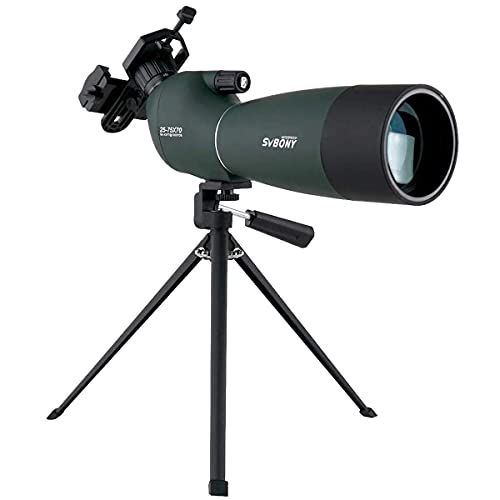
- 25-75x zoom for easy magnification changes
- 70mm lens and waterproof body for outdoor use
- Includes phone adapter and desktop tripod
Best For: Beginners wanting a portable scope for casual astronomy and daytime use
Compact Astronomy Choice

- 700mm focal length for sharper bright-target views
- Compact 70mm Maksutov-Cassegrain design
- Includes tabletop tripod with slow motion controls
Best For: Viewers who want a compact scope for the Moon, planets, and daytime spotting
Bright-View Upgrade
SVBONY SV28 100mm Spotting Scope

- 100mm aperture for stronger light gathering
- FMC optics help deliver a brighter image
- Includes tripod, phone adapter, and carrying case
Best For: Users prioritizing brightness and detail for casual astronomy and long-range viewing
Budget-Friendly 20-60x80 for Versatile Viewing
20-60x80 spotting scope with tripod and phone adapter

- 20-60x zoom with 80mm objective lens
- Includes tripod, phone adapter, and carrying bag
- BAK4 prisms and multi-layer coatings improve brightness
Best For: Beginners wanting a value-packed scope for moon viewing and everyday use
Compact Maksutov Pick for Lunar and Planetary Viewing
SV41Pro 28-84x80 Maksutov spotting scope

- Maksutov-Cassegrain design with 800mm focal length
- 28-84x zoom eyepiece for higher magnification
- Portable 1.8kg setup with tripod and case
Best For: Astronomy users who want a compact scope for the Moon and planets
High-Zoom 25-75x80 with Full-Size Tripod
25-75x80 spotting scope with full-size tripod

- 25-75x zoom with 80mm objective lens
- Includes full-size adjustable tripod and phone adapter
- Fully multi-coated optics with BAK4 roof prism
Best For: Buyers wanting higher zoom and a steadier tripod for astronomy and outdoor viewing
NASA-Grade Compact SCT – Celestron C5 Schmidt-Cassegrain
If you want spotting scopes for astronomy that can also handle daytime spotting, the Celestron C5 brings a 5-inch Schmidt-Cassegrain design with 1250mm focal length and an f/10 ratio. It is built for bright, sharp views of distant targets, and its compact 6-pound body makes it easier to carry and store than many 5-inch optics.
Best For: Observers who want a compact, camera-adaptable scope for astronomy, digiscoping, and long-distance viewing.
Pros:
- 5-inch aperture with 1250mm focal length for distant viewing
- Compact 11-inch length and 6-pound weight for portability
- Includes 6×30 finderscope and water-resistant carrying case
- Fully camera adaptable with optional T-adapter and T-ring
Cons:
- Manual focus only
- Equatorial mount means setup may be more involved than a simple tabletop option
- Accessories for camera use are optional, not included
This is a strong pick if you want a compact astronomy-capable spotting scope from a well-known optics brand. It stands out for portability and optical reach, though it is best suited to users comfortable with a more traditional telescope-style setup.
Dual-Focus Zoom Kit – 20-60×80 HD Spotting Scope
Among spotting scopes for astronomy, this 20-60×80 model stands out for its dual focusing system, 80mm objective lens, and included tripod setup. The zoom range gives you flexibility for sweeping views or tighter detail, while the BAK4 prism and full broadband multi-coating are designed to improve brightness and clarity in challenging light.
Best For: Buyers who want an all-in-one zoom spotting scope with phone-adapter convenience and a full accessory kit.
Pros:
- 20-60x zoom with dual focus knobs for quick, precise adjustments
- BAK4 prism and full broadband multi-coating for brighter views
- Includes tripod, carrying case, and smartphone adapter
- Waterproof and fogproof with nitrogen purging and rubber armor
Cons:
- Weighs more than the lightest travel scopes
- Angled 45° body may not suit every viewing preference
- Built around a detachable eyepiece system, so it is less minimalist than a bare scope
This is a practical bundle for buyers who want useful accessories right away. Its main appeal is convenience: you get zoom, support gear, and phone-adapter compatibility in one package.
Ultra-Compact Maksutov – Celestron C90 Spotting Scope
The Celestron C90 is a compact option for spotting scopes for astronomy if you want a small, portable Maksutov-Cassegrain design with 1250mm focal length. It is also built for birding and target shooting, but its notes specifically call out viewing astronomical objects at night and emphasize high-contrast, long-range performance.
Best For: Astronomers and travelers who want a highly portable scope that can double for daytime spotting.
Pros:
- Compact Maksutov-Cassegrain design for easier transport
- 1250mm focal length for distant views and astronomy use
- Includes 32mm eyepiece, diagonal, finderscope, and backpack
- Fully camera adaptable for digiscoping with optional accessories
Cons:
- 90mm objective is smaller than 80mm-class zoom scopes in aperture naming, so light-gathering expectations should be set accordingly
- Manual focus only
- Camera setup requires optional T-adapter and T-ring
This is a good fit if portability matters as much as performance. It keeps the package small while still offering the focal length and included accessories that make it appealing for mixed astronomy and terrestrial use.
Ready-to-Go Zoom Kit – 20-60×80 HD Waterproof Scope
This 20-60×80 spotting scope is a straightforward choice for spotting scopes for astronomy when you want a complete kit with little extra shopping. It offers an 80mm objective lens, fully multi-coated optics, and a 20x to 60x zoom range, plus the included tripod and smartphone adapter make it easy to start observing immediately.
Best For: Beginners who want a waterproof, accessory-packed zoom scope for long-distance viewing and casual astronomy.
Pros:
- 80mm objective with fully multi-coated optics for bright viewing
- 20x to 60x zoom for flexible detail work
- Includes tripod, carry bag, lens cloth, and smartphone adapter
- Waterproof and fogproof with nitrogen purging and rubber armor
Cons:
- Manual focus only
- 3-pound weight is portable, but not as compact as a small telescope-style scope
- Single-year manufacturer warranty is shorter than some premium optics coverage
This model is appealing if you want a practical starter bundle rather than a bare optical tube. It balances zoom flexibility with weather protection and useful accessories, which makes it easy to recommend for casual, multi-purpose use.
Beginner-Friendly Pick – SVBONY SV28 25-75×70 Spotting Scope
If you’re comparing spotting scopes for astronomy on a budget, this SVBONY SV28 is a practical starter option. Its 70mm objective lens, 25-75x zoom eyepiece, and portable tripod make it easy to set up for casual viewing of the Moon and brighter night-sky targets.
Best For: Beginners who want an affordable, lightweight scope that can also handle casual astronomy use.
Pros:
- 25-75x zoom makes it easy to adjust magnification for different viewing needs.
- 70mm lens offers decent light gathering for a compact, portable scope.
- Waterproof construction and non-slip finish add some durability for outdoor use.
- Includes a phone adapter and desktop tripod for easier setup and sharing views.
Cons:
- Designed mainly as a beginner spotting scope, so it is not built for deep-sky astronomy.
- The included desktop tripod is better for table use than full-height observing.
Overall, this is a sensible entry-level choice if you want a versatile spotting scope that can do light astronomy without a large investment. It is strongest for portable, casual observing rather than serious nighttime stargazing.
Compact Astronomy Choice – Celestron C70 Mini Mak
The Celestron C70 Mini Mak is one of the more astronomy-friendly options in the spotting scopes for astronomy category. With a 70mm Maksutov-Cassegrain design, 700mm focal length, and built-in 25-75x zoom eyepiece, it is made for sharper, higher-contrast views of the Moon, Jupiter, Saturn, and other bright targets.
Best For: Users who want a compact spotting scope that can double as a modest lunar and planetary viewer.
Pros:
- 700mm focal length and f/10 ratio are well suited to small bright astronomical targets.
- Mini Maksutov-Cassegrain design offers a compact, lightweight build for travel.
- Includes a tabletop tripod with slow motion controls for easier aiming.
- Works for both daytime observing and night views of the Moon and planets.
Cons:
- 70mm aperture is useful, but it is still limited for more demanding astronomy.
- The included tabletop tripod may feel restrictive for some outdoor setups.
This is the most astronomy-focused pick here if you want a small, portable scope with legitimate night-sky use. It is best for bright-object viewing rather than wide-field deep-sky observing.
Bright-View Upgrade – SVBONY SV28 100mm Spotting Scope
If you want more light-gathering power in spotting scopes for astronomy, this SVBONY SV28 100mm model is the strongest brightness-focused option in the group. The 100mm aperture, 25-75x zoom, and fully multi-coated optics are aimed at giving you a brighter image with more visible detail, especially in low light.
Best For: Buyers who want the brightest possible view from this lineup for casual night-sky and long-range use.
Pros:
- 100mm aperture gathers substantially more light than smaller 65-70mm class scopes.
- FMC optics help improve light transmission for a brighter view.
- 25-75x zoom gives flexibility for dialing in detail.
- Includes a desktop tripod, smartphone adapter, carrying case, and lens covers.
Cons:
- The scope is heavier and less travel-friendly than the smaller models.
- The included tripod is desktop-sized, so taller outdoor support may need to be purchased separately.
For casual astronomy, this model stands out when brightness matters most. Its larger aperture makes it the best fit here for users who want more detail and a fuller image, even if portability takes a back seat.
Budget-Friendly 20-60×80 for Versatile Viewing – 20-60×80 spotting scope with tripod and phone adapter
If you want one of the more affordable spotting scopes for astronomy that can also handle daytime use, this 20-60×80 model gives you a wide zoom range, an 80mm objective lens, and a tripod in the box. It’s built for manual focusing and includes a phone adapter, making it a practical pick for lunar viewing, casual sky scanning, and everyday outdoor observation.
Best For: Beginners who want a feature-packed spotting scope for astronomy, moon դիտing, and general outdoor use.
Pros:
- 20-60x zoom with an 80mm objective lens for flexible viewing
- Includes tripod, phone adapter, carrying bag, and lens covers
- BAK4 prism optics with multi-layer coated lenses for brighter visuals
- Retractable eyepiece and sunshade help with comfort and glare control
Cons:
- Manual focus only, so fine tuning takes practice
- More geared toward general use than dedicated astronomy performance
- Tripod is included, but the product notes don’t suggest a heavy-duty build
Overall, this is a strong value option if you want an all-in-one starter scope with enough flexibility for moon viewing and daytime spotting without buying extra accessories separately.
Compact Maksutov Pick for Lunar and Planetary Viewing – SV41Pro 28-84×80 Maksutov spotting scope
This SVBONY model stands out among spotting scopes for astronomy because it uses a compact Maksutov-Cassegrain optical design with an 800mm focal length and a 28-84x zoom eyepiece. It’s also lightweight and portable, which makes it easier to set up for lunar and planetary observation while still working for terrestrial spotting.
Best For: Viewers who want a compact astronomy-friendly spotting scope for the Moon, planets, and travel.
Pros:
- Compact Maksutov-Cassegrain design with 800mm focal length
- 28-84x zoom eyepiece for high-power detail viewing
- 80mm objective lens and FMC coating for brighter, clearer images
- Includes tripod and soft carrying case for grab-and-go use
Cons:
- Table tripod and lightweight build suggest a smaller setup
- Finder scope is not included, though a base is reserved for one
- WiFi camera compatibility depends on separate accessories
If astronomy is a real priority, this is the most purpose-built option here thanks to its optical design and longer focal length. It still remains portable enough for travel and quick sessions.
High-Zoom 25-75×80 with Full-Size Tripod – 25-75×80 spotting scope with full-size tripod
For spotting scopes for astronomy that also cover outdoor viewing, this 25-75×80 model brings a wide magnification range, a fully multi-coated 80mm lens, and a full-size tripod. The angled eyepiece and included phone adapter make it convenient for relaxed viewing and easy digiscoping, especially if you want a scope that can also handle moon and general distance observation.
Best For: Users who want a higher-zoom spotting scope for astronomy and versatile outdoor viewing.
Pros:
- 25-75x zoom gives more reach than many starter scopes
- Fully multi-coated 80mm lens and BAK4 roof prism for bright, clear images
- Full-size adjustable tripod adds more setup flexibility
- Waterproof and fogproof design supports all-weather use
Cons:
- Heavier at 3.46 kg than more compact options
- Still a manual-focus scope, so it’s not instant to dial in
- 45-degree angled eyepiece may not suit every user preference
This is a practical choice if you want more magnification and a sturdier tripod package. It’s less compact, but it offers a well-rounded feature set for both astronomy and field use.
How We Picked the Best Spotting Scopes for Astronomy
For this roundup of Spotting Scopes for Astronomy, we focused on optics that offer enough aperture to gather light, useful zoom ranges without excessive image softening, and mounts or tripods that support steady viewing. We also looked for practical features such as waterproof construction, angled viewing, and phone-adapter compatibility, since these can make a real difference at the eyepiece.
Quick Comparison
In general, larger objectives such as 80mm and above tend to show brighter lunar detail and improve viewing comfort at higher power, while compact Mak-style scopes are easier to carry and can be excellent for the Moon and planets. If you want the most flexible all-around option, look for a stable 20-60x or 25-75x zoom paired with a solid tripod. If portability matters most, smaller apertures can still deliver satisfying views with less bulk.
Key Buying Factors for Spotting Scopes for Astronomy
Aperture and Light Gathering
Aperture is one of the most important specs. For astronomy use, more light usually means a brighter, more detailed image. A larger objective lens generally helps with lunar observing and makes high magnification more usable.
Magnification Range
Big zoom numbers are not always better. Past a certain point, atmospheric turbulence and optical limits can make the image softer. A moderate zoom range with good optical quality is often more practical than extreme magnification claims.
Optical Design
Maksutov-style designs can be appealing for astronomy because they are compact and often provide sharp views at medium power. Traditional straight or angled spotting scopes can work well too, especially for casual skywatching and dual-use daytime viewing.
Mount Stability
No matter how good the optics are, shaky support ruins the experience. A sturdy tripod matters as much as the scope itself. Heavier scopes usually need a better tripod head to stay steady at higher magnification.
Weather Resistance and Ease of Use
Waterproofing, angled eyepieces, and phone adapters are useful extras, especially if you plan to share views or observe outdoors in variable conditions.
Who Should Buy Which Spotting Scopes for Astronomy?
If you want the best value for occasional Moon viewing and daytime use, a standard 80mm zoom spotting scope is usually the easiest starting point. If you want a more astronomy-focused option, a compact Maksutov model may offer sharper, more controlled performance for bright targets. If you are new to Spotting Scopes for Astronomy, choose the model that gives you the steadiest setup and the clearest image at moderate power rather than chasing maximum magnification.